




Health & Education
We all want the best care possible for our horses. The Heath & Education section covers both Learning Institutions, Organizations as well as many sources for equine assistance including Veterinarians and Farriers.
For those who want a to formally study horses, the Education section includes College Riding, Equine Studies, and Veterinary Schools. Learn about the wide variety of horses in the Horse Breeds section. Supplements and Treatments Therapy are also included in the section.
Everyone can learn from Fine Art and there are some specialty Museums that might surprise you.
Horses as a therapy partner enrich the lives of the disabled. These facilities are listed in our Therapeutic Riding section. To help children and young adults build confidence and grow emotionally, please see the resources available on the Youth Outreach page.
Looking for a place to keep your horse? You can find it in the Horse Boarding section. Traveling? Find a Shipping company or Horse Sitting service if your horse is staying home!
Want to stay up to date with the latest training clinics or professional conferences? Take a look at our Calendar of Events for Health & Education for the dates and locations of upcoming events.
Do we need to add more? Please use the useful feedback link and let us know!
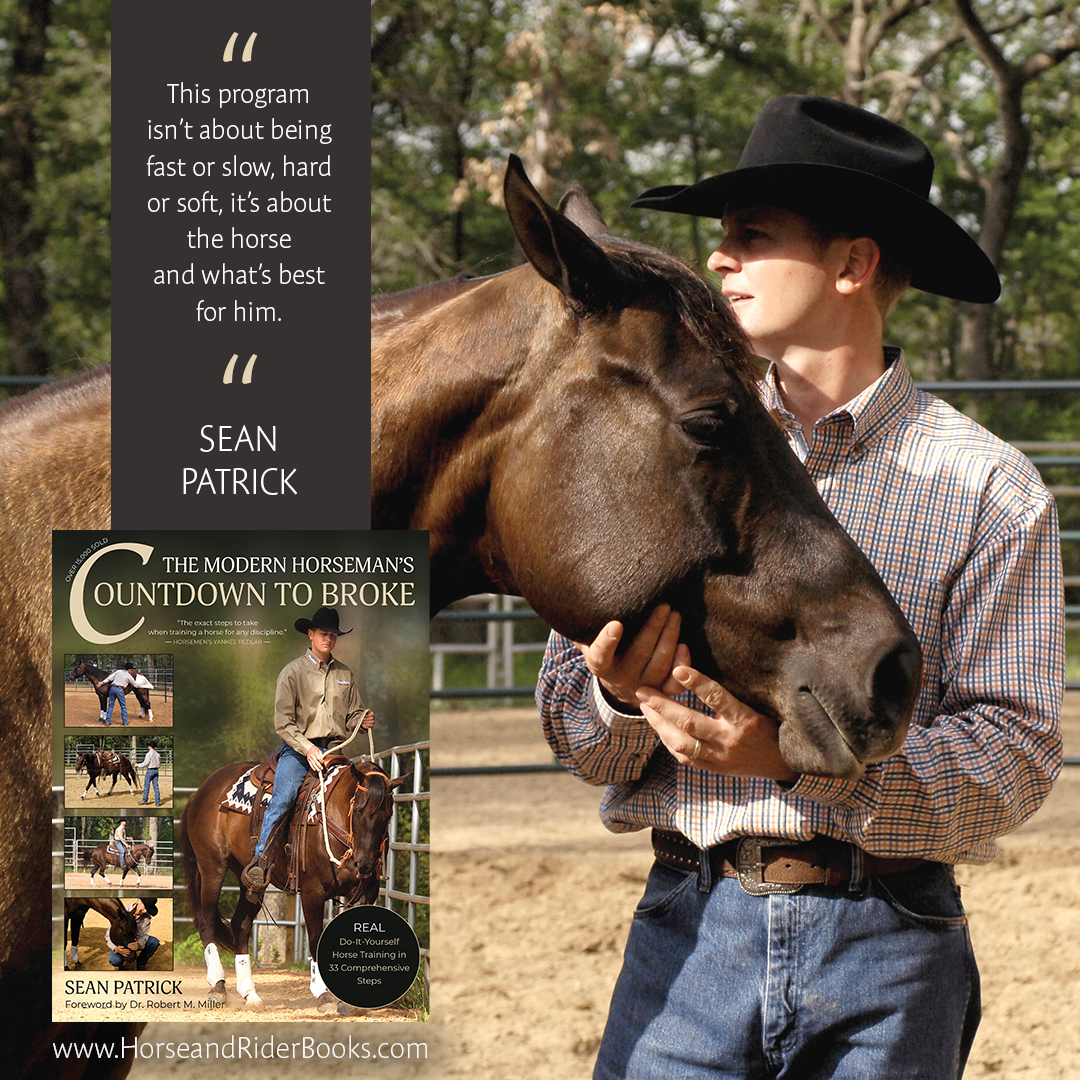
By Sean Patrick
Helping Your Horse Overcome His Fears
Horses usually take the path of least resistance and conserve their energy…a nice way of saying that they are inherently lazy. So why does a young horse surge in speed under saddle when a slower pace would take less effort? The answer can be explained by examining the horse’s fear level. He needs to build confidence through experience and habituation. Building your horse’s confidence is not just about desensitizing him to a saddle pad; it is an ongoing process every time you handle him or get in the saddle.
Expect your horse to be fearful of new experiences. Your job is to assist him in overcoming his fear. Here is a list of measures you can take:
- Use your hands and legs wisely. Your horse must completely trust your actions and intentions. Communicate through physical touch that is fair and pleasing.
- Apply motivators consistently and fairly—smoothly and with warning. For example, when using a dressage whip, take your position and begin hind-end tapping slowly with increasing firmness. Never startle your horse with an unexpected firm tap. With fair application he’ll learn to respond without ever showing signs of fear.
- Be reasonable and consistent with reprimands. Your horse needs to know where the line is, and that the line is stationary.
- Spend ample time in the saddle on a regular basis. This keeps your horse prepared and accustomed to his job as a riding horse. When your riding time is short and infrequent, he won’t progress nearly as well. You want the saddle and rider to be a normal part of his routine, where fear and discomfort are not factors.
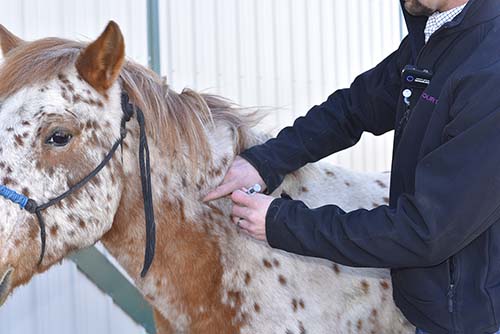
Disease symptoms, transmission and prevention, as described by an entomologist and veterinarian.
It was early in the mosquito season when a young cutting horse, who had just started training, became inflicted with West Nile virus.
“The horse didn’t know where he was placing his feet, and his gait was off. When the bloodwork came back, it ended up being West Nile,” said Tony Hawkins, DVM, Valley Vet Supply Technical Service Veterinarian. “It’s such an easy disease to prevent – as long as the horse is properly vaccinated, you don’t get any breakthrough infections.”
With about 10 weeks of treatment, the gelding survived and made a full recovery, which can be rare.
“Not many horses will recover fully. While the survival rate is high (67%), there can be some lasting side effects,” said Dr. Hawkins.
Since 1999, more than 25,000 cases of WNV encephalitis have been reported in U.S. horses, according to the American Association of Equine Practitioners (AAEP). Even more, horses represent 96.9% of all reported non-human mammalian cases of WNV disease.
With mortality rates reaching up to 90% from mosquito-transmitted diseases, it’s important that horses be protected.
Read more: Help Nix the Culex Mosquito that Transmits 3 of 5 Core Equine Diseases
- Communication Between Human and Horse
- Research into Development of the Foal’s Gut Could Advance Treatment of Critical Cases of Diarrhea
- Mosquitoes Undeterred by Drought – 4 Tips to Protect Your Horse
- An Equine Methionine Crisis is Brewing
- Beware Supplemental Iron
- Sugar Does Not Cause Equine Metabolic Syndrome
- Welcome to London College of Animal Osteopathy (LCAO) (2:17)
- Katie Navarra Coaching - Reset: Reconnect: Reframe
- The New Foal Exam with Dr Laurie Metcalfe - Rood & Riddle Stallside Podcast
- Solving a Mare’s ‘Behavioral’ Problems
- Wintertime Equine Nutrition: 3 Facts
- The Heart of Laminitis Care
- Our First Year with Dr Peter Morresey and Dr Bart Barber
- What’s New in Equine Healthcare with Dr Peter Morresey and Dr Bart Barber
- EHV-1 Research Study and Infection Control Tips
- Hoof Care in Winter
- Caring for Barn Cats?
- Pilates for Horses—It’s a Thing
- Fix the Horse That’s Behind the Bit
- Training the Equestrian Body and Mind with Yoga