




Health & Education
We all want the best care possible for our horses. The Heath & Education section covers both Learning Institutions, Organizations as well as many sources for equine assistance including Veterinarians and Farriers.
For those who want a to formally study horses, the Education section includes College Riding, Equine Studies, and Veterinary Schools. Learn about the wide variety of horses in the Horse Breeds section. Supplements and Treatments Therapy are also included in the section.
Everyone can learn from Fine Art and there are some specialty Museums that might surprise you.
Horses as a therapy partner enrich the lives of the disabled. These facilities are listed in our Therapeutic Riding section. To help children and young adults build confidence and grow emotionally, please see the resources available on the Youth Outreach page.
Looking for a place to keep your horse? You can find it in the Horse Boarding section. Traveling? Find a Shipping company or Horse Sitting service if your horse is staying home!
Want to stay up to date with the latest training clinics or professional conferences? Take a look at our Calendar of Events for Health & Education for the dates and locations of upcoming events.
Do we need to add more? Please use the useful feedback link and let us know!
This is a sample Intro to Lope lesson for horseback riding students demonstrating the 15 minute lesson format used by participants during a Certified Horsemanship Association (CHA) riding instructor certification. Visit CHA.horse to find a certification near you.
Read more: Sample Lesson: First Lope with Tara Reimer (17:12)
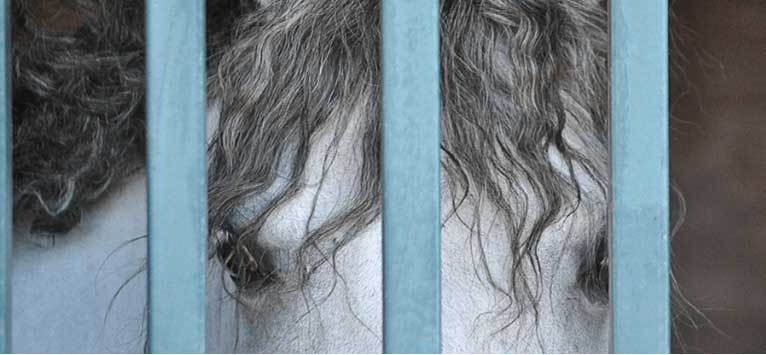
Despite veterinary experts inundating horse owners with information on the link between obesity, equine metabolic syndrome, and laminitis, overconditioning and subsequent obesity are prominent welfare issues. An estimated 50% of horses are classified as overweight, with up to 30% of those considered obese. This problem, however, is not restricted to sedentary horses but is widespread, even among elite performance horses.
In a recent study, nutritionists at North Carolina State University evaluated the body condition scores (BCS) of 377 elite ponies competing at a national hunter competition.* The same two evaluators also assigned a cresty neck score (CNS) to the same ponies.
“The standard nine-point Henneke BCS scale was used, where a BCS of 5 was considered ideal and a BCS greater than 6 was considered overweight. For the five-point CNS, a ‘cresty neck’ was defined as a score of more than 2.5,” explained Ashley Fowler, Ph.D., a nutritionist for Kentucky Equine Research.
“A cresty neck is characterized by fat accumulation along the top of the neck. Studies have found that a cresty neck increases the risk for metabolic issues, such as insulin resistance. Some horses may have a cresty neck without being considered fat or extremely fat (BCS higher than 7), so measuring both BCS and CNS is important,” explained Fowler.
The average BCS of the ponies was 6.7, which is considered overweight. No pony was designated as thin as all ponies had a BCS of more than 5. The average CNS was 2.8, meaning, as a group, the ponies did have cresty necks.
“In total, 93% of the ponies were overweight, with 35.5% of those having a BCS greater than 7,” summarized Fowler.
According to the nutritionists conducting the study, “This is of concern considering the vast amount of evidence to suggest that overweight equids are at a higher risk of disease. Animals with a body condition score of 7 or higher and/or regional adiposity (such as a cresty neck) have a 3-5 times higher risk of developing laminitis.”
Potential reasons explaining the tendency towards obesity include the following:
- Impression by owners that overconditioned animals perform better than underconditioned animals;
- Peer pressure from other owners can affect how individuals approach their own horse’s adiposity and weight-loss efforts;
- Owners are not skilled at evaluating BCS, with studies showing they often do not recognize their horse is overweight or obese; and
- Studies show that even judges “prefer” overweight horses to lean (but not thin) ones.
Read more: Obese Equine Athletes: Are These “Unhealthy” Healthy Horses?
- Facility Design with Biosecurity in Mind
- What's In Your Hay?
- Reading Horse Behavior with Dale Rudin (7:55)
- Why Do Horse Breeders Terminate a Twin?
- Rood & Riddle Stallside Podcast: The Importance of Ultrasound with Dr Colton Thacker (26:33)
- Infection Disease Control tips for Horse Farms - Dr. Scott Weese (15:62)
- Why the Sudden Behavior Change in My Horse?
- Hydrolyzable Carbohydrates and the Metabolic Horse
- Rood & Riddle Stallside Podcast - 0:03 / 27:14 • Intro The Most Interesting Guest so Far with Dr Bart Barber - Episode 50!
- Catching the Horse in a Paddock with Teresa Kackert (5:29)
- Equine Guelph Declares February Colic Prevention Education Month
- The History Of Equine Slaughter In The United States (Part 2 In A Series)
- Rood & Riddle Stallside Podcast - The PET Scan, Old Technology, New Applications with Dr Katie Garrett and Dr Jose Bras (33:01)
- To Shoe or Not to Shoe? An Excerpt from Shoeing the Modern Horse
- Rood & Riddle Stallside Podcast - The Time is Right for Your Barren Mare’s Check up with Dr Pete Sheerin (37:37)
- Ten Tips for Lunging Your Horse
- 5 Tips to Help You Train Your Horse
- Stem Cells Under Investigation as a Possible Future Treatment for Equine Asthma
- Fitness for the Pregnant Rider - an excerpt from "Ultimate Exercise Routines for Riders"
- Published: Canagliflozin for Control of Refractory Equine Hyperinsulinemia and Laminitis