




Health & Education
We all want the best care possible for our horses. The Heath & Education section covers both Learning Institutions, Organizations as well as many sources for equine assistance including Veterinarians and Farriers.
For those who want a to formally study horses, the Education section includes College Riding, Equine Studies, and Veterinary Schools. Learn about the wide variety of horses in the Horse Breeds section. Supplements and Treatments Therapy are also included in the section.
Everyone can learn from Fine Art and there are some specialty Museums that might surprise you.
Horses as a therapy partner enrich the lives of the disabled. These facilities are listed in our Therapeutic Riding section. To help children and young adults build confidence and grow emotionally, please see the resources available on the Youth Outreach page.
Looking for a place to keep your horse? You can find it in the Horse Boarding section. Traveling? Find a Shipping company or Horse Sitting service if your horse is staying home!
Want to stay up to date with the latest training clinics or professional conferences? Take a look at our Calendar of Events for Health & Education for the dates and locations of upcoming events.
Do we need to add more? Please use the useful feedback link and let us know!
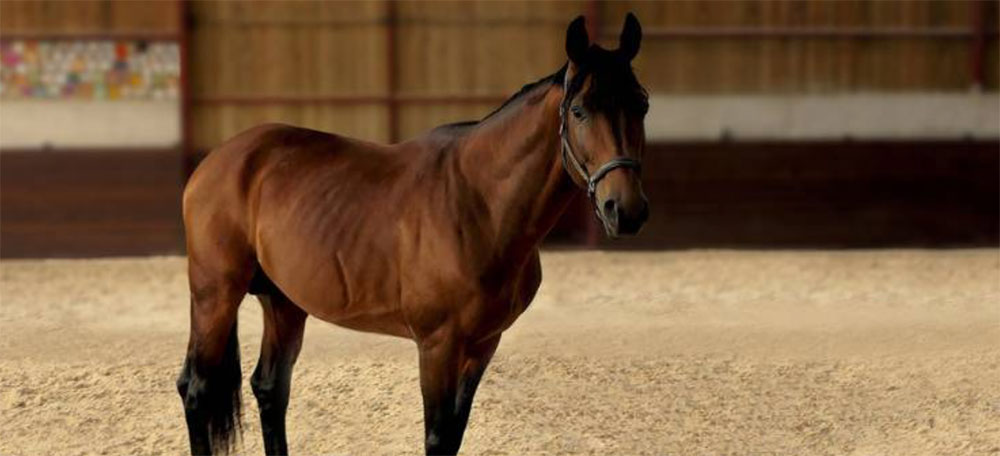
All the horses in the barn get the same amount of feed every day; it makes feeding time much simpler. The warmbloods look super. Their weight is good, and their coats are gleaming. However, the one Thoroughbred in the barn who arrived a little thin six months ago has not put on any weight.
In fact, he has lost body condition. He is getting grain just like the other horses, so what could be wrong? A veterinarian has thoroughly examined the horse and nothing appears to be wrong. Could it be as simple as insufficient caloric intake? What kind of changes can be made to his feeding program to encourage weight gain?
Sometimes, getting a thin horse to gain weight is simply a matter of increasing the caloric density of the diet. Other times, the diet may need to be higher in calories because of a medical, psychological or environmental problem.
What makes a horse a hard keeper?
The metabolic rate determines whether a horse is an easy or hard keeper, and the variation between horses can be extreme.
Metabolism is the speed at which the body burns fuels for energy in order to maintain normal body functions. A slow metabolism can function on little input of fuel energy. Conversely, a fast metabolism needs a higher caloric intake in order to function properly.
In general, members of certain breeds have faster metabolisms and need more food to maintain body condition than members of other breeds. For example, Thoroughbreds usually eat more per pound of body weight than draft horses. There is also variety within a breed. For instance, some Thoroughbreds are easy keepers while others require intense management to maintain body weight.
Temperament often goes hand in hand with metabolic rate. A nervous horse may require more calories than a calm tempered one to maintain the same body condition. A tense horse may spend more time stall walking or weaving while the calm horse conserves energy stores.
A thin horse requires energy in the diet to ensure proper functioning of body processes and to build fat stores. Energy is a general term, yet many horsemen associate the word energy with mental energy. In this article, energy refers to the potential of a feed to fuel body functions and exercise.
Weight gain in the horse can be attributed to protein or fat deposition. When a horse does not have enough calories or protein in the diet, the body will break down its own muscle tissue and deplete much of the adipose tissue or fat.
This results in emaciation with poor muscle definition and protruding bones.
When the diet has excessive calories, the body will build muscle and adipose stores. The simplified solution to poor weight is to increase the caloric content of the diet while ensuring adequate protein content. The three nutrients which can supply energy to increase the caloric content of the diet in the horse are fiber, starch and fat.
Each nutrient is utilized for energy in a slightly different way in the body which, depending on the horse, can be advantageous or not.
Fiber
Of the three major energy sources for the horse, fiber is the most important, most underestimated and the safest. Fiber is the major component of grass and hay.
Some horses can maintain their weight on fiber sources alone. For the hard keeper, however, fiber alone will not maintain weight, but there are fiber feeding strategies that can increase the ability of the horse to derive energy from fiber.
Icelandic horses and loved all over the world and it has never been easier to buy horses in their home country and export them to their new destination, due to a great number of experts and professionals in the industry.
In this video we see the horses being brought down from the highlands in the fall and gathered at Víðidalstungurétt, where the owners bring them back to their farm. We speak with horse trainers, tourism operators, exporters and also a farm in Europe who assist with the transitioning. Enjoy!
The video was filmed and edited by Wild Horse Films.
Read more: The Export Journey of the Icelandic Horse (22:17)
- Why Wear a Helmet? Riders Share Harrowing Close Calls
- Equine Affaire Educational Program - Monty Roberts performs Join-Up with a Wild Horse (22:37)
- Veterinarian, Equestrian Advises on Caring for the Senior Show Horse
- Rood & Riddle "Stallside" Podcast - Scratches and Hives Oh My! with Dr Julia Miller
- Your Child Wants to Ride a Horse! What Should You Do?
- Biosecurity Education & Training
- Sample Lesson: First Lope with Tara Reimer (17:12)
- Obese Equine Athletes: Are These “Unhealthy” Healthy Horses?
- Facility Design with Biosecurity in Mind
- What's In Your Hay?
- Reading Horse Behavior with Dale Rudin (7:55)
- Why Do Horse Breeders Terminate a Twin?
- Rood & Riddle Stallside Podcast: The Importance of Ultrasound with Dr Colton Thacker (26:33)
- Infection Disease Control tips for Horse Farms - Dr. Scott Weese (15:62)
- Why the Sudden Behavior Change in My Horse?
- Hydrolyzable Carbohydrates and the Metabolic Horse
- Rood & Riddle Stallside Podcast - 0:03 / 27:14 • Intro The Most Interesting Guest so Far with Dr Bart Barber - Episode 50!
- Catching the Horse in a Paddock with Teresa Kackert (5:29)
- Equine Guelph Declares February Colic Prevention Education Month
- The History Of Equine Slaughter In The United States (Part 2 In A Series)