



Health & Education
We all want the best care possible for our horses. The Heath & Education section covers both Learning Institutions, Organizations as well as many sources for equine assistance including Veterinarians and Farriers.
For those who want a to formally study horses, the Education section includes College Riding, Equine Studies, and Veterinary Schools. Learn about the wide variety of horses in the Horse Breeds section. Supplements and Treatments Therapy are also included in the section.
Everyone can learn from Fine Art and there are some specialty Museums that might surprise you.
Horses as a therapy partner enrich the lives of the disabled. These facilities are listed in our Therapeutic Riding section. To help children and young adults build confidence and grow emotionally, please see the resources available on the Youth Outreach page.
Looking for a place to keep your horse? You can find it in the Horse Boarding section. Traveling? Find a Shipping company or Horse Sitting service if your horse is staying home!
Want to stay up to date with the latest training clinics or professional conferences? Take a look at our Calendar of Events for Health & Education for the dates and locations of upcoming events.
Do we need to add more? Please use the useful feedback link and let us know!
By Juliet M. Getty, Ph.D.
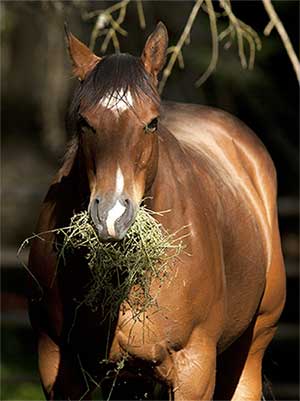
It's easy to spend a fortune on the next fancy feed, supplement or gadget. Sure, there are plenty of worthwhile products that may very likely improve health and reverse illness, but none of them truly matter without meeting these five foundational principles. These are true for all horses, regardless of age, breed, condition, or purpose. Even seasonal or regional variations do not alter these.
Here is what every horse needs. Period.
Water - the most important nutrient
It must be plentiful, clean, and of the right temperature to encourage horses to drink. A horse at maintenance, living in a temperate climate will require a minimum of ½ to 1 gallon per hundred pounds of body weight. For the 1100 lb (500 kg) horse, that equates to 5.5 to 11 gallons (21 to 42 liters) per day. [i] However, his demand for water will increase with activity and warmer temperatures. Here are some factors to consider:
- Water must be freshened daily. Dead insects, bird droppings and excessive pond scum can poison your horse [ii]. Using smaller water troughs can make cleaning easier.
- Never add salt or electrolytes to your horse’s only water supply. Plain water must always be available.
- Pasture is high in moisture, typically containing 60 to 80 percent water, whereas most hays have only 7 to 10% moisture.
- High protein diets increase water requirements since protein can have a diuretic effect.
- During cold weather, horses drink less, especially if the water is ice cold. This potentially leads to dehydration – the main cause of colic in the winter. Heating water between 45 and 60 degrees F (7 to 15 degrees C) will promote more water consumption. Be sure the heater has no exposed wires that could electrify the water source.
- If you rely on creeks or ponds, the water must be moving and deep enough to not freeze.
- Snow consumption will not meet your horse’s water requirement. One gallon of average snow contains only 10 ounces of water. Also, eating snow will force your horse to burn precious calories needed to keep his body temperature steady.
Salt is required daily, regardless of the season
In cold seasons, salt helps promote that all-important water consumption. In warm seasons, supplemented salt replaces what is lost from perspiration. A full-sized horse requires at least one ounce (two level tablespoons or 30 ml) of salt each day for maintenance -- this much provides 12 grams of sodium. Heat, humidity, and exercise increase the horse’s need. There are several ways to accomplish this:
- Granulated salt can be offered free-choice. Check your source for prussic acid, an anti-caking agent. This contains cyanide and should be avoided.
- Mined sea salt offers many minute quantities of trace minerals that are typically not available in the average diet. [iii]
- A salt rock should be available should your horse want more. Experiment with different natural types to see what your horse enjoys most. Many horses, however, are not comfortable with constant licking.
- If salt consumption is too low via free-choice feeding, calculate the amount of sodium your horse is getting from any commercial feeds or supplements and add salt accordingly. (For palatability, limit the amount to no more than 1 tablespoon per meal.)
- Do not offer electrolyte supplements instead of plain salt. Electrolytes are meant to replace perspiration losses and fed in addition to salt. Never add electrolytes to your horses only water supply.
- Watch the iodine content in mineralized salt preparations. Too much iodine, and not enough selenium, can damage the thyroid gland. Iodine and selenium intakes need to be similar.
Forage is the foundation of the diet – it must flow through the digestive tract 24/7
Horses are grazing animals and are designed to consume forage virtually all day and night, only taking a few minutes here and there to rest; this also includes ponies, minis, donkeys, and mules. There are many reasons why your horse must always have hay and/or pasture:
- The horse’s stomach produces acid continuously, even when empty. The acid in an empty stomach can lead to the formation of ulcers anywhere along the gastrointestinal tract.
- The cecum, where fiber is fermented, has its entrance and exit at the top; therefore, it must be full in order to evacuate digested forage. If not, substances sink to the bottom, potentially leading to impactions and sand colic.
- The digestive tract consists of muscles which are “exercised” by the steady flow of forage. “Flabby” muscles can twist or intussuscept (telescope)—increasing the risk of colic.
- An empty stomach causes incredible stress, creating a hormonal response that raises insulin, an inflammatory hormone that can potentiate laminitis. Elevated insulin also tells the body to store fat.
- Stress from forage restriction can lead to obesity, a damaged metabolic rate, laminitis relapses, and inflammation of the hypothalamic region of the brain, accelerating the development of leptin resistance and even Cushing’s disease. [iv]
- Elevated stress also impacts immune function, making your horse more susceptible to infections and allergies, as well as negative reactions to vaccinations.
Don’t let anyone scare you into thinking that feeding hay free-choice will damage your horse. Please read “Equine Digestion – It’s Decidedly Different” to empower you with the knowledge needed to help your horses. [v] Hay testing and commercially available “slow feeders” are worthwhile for many horses. [vi]
Replace what hay is missing
Many horses rely entirely on hay for their forage needs. Is hay nutritious? Not very. Hay is dead grass; it no longer contains many of the vitamins, omega 3s and omega 6s it once had as living pasture. It does, however, contain protein, carbohydrates, and minerals, and is a significant source of energy. Consider the following to fill in the nutritional gaps:
- Add a comprehensive vitamin/mineral supplement that offers what hay is missing -- beta carotene (or vitamin A), vitamin D, and vitamin E.
- Vitamin C is lost in hay; however, young horses’ bodies produce adequate amounts. As horses age, the liver can become less efficient at synthesizing this vitamin.
- Add a variety of protein sources by feeding several types of forages. When only one type of hay is fed, the protein quality of the diet is poor and can prevent your horse from replacing and repairing tissues throughout the body.
- Sunlight exposure is needed for vitamin D production. The precursor to vitamin D is naturally found in grass, but diminishes the longer hay is stored.
- Simulate the fatty acid content of grasses by providing a feed source that has more omega 3s than omega 6s. Chia seeds or ground flaxseeds are good choices.[vii]
Movement, companionship and shelter are vital necessities
Horses need to move and have the protection of a buddy. Standing in a small area for hours on end (even if part of it is outdoors) takes its toll on your horse’s mental and physical health. So does being isolated from buddies. The stress can be so great that it dramatically diminishes your horse’s quality and length of life by compromising his immune system and hormonal responses. We see the effect in a vast variety of health issues:
- Obesity, insulin resistance, loss of muscle mass, and sluggish metabolic rate
- Porous bones and potential fractures
- Inadequate blood circulation, reducing the flow of nutrients and oxygen to the feet, joints, tendons/ligaments, and hair follicles
- Potential for digestive disorders including colic, ulcers, and diarrhea
- Compensatory behavior, including weaving, stall-walking, pawing, wall-kicking, chewing, head-bobbing, self-biting, and even cribbing
- Slowed cartilage and joint development in growing horses
- Accelerated aging, increasing susceptibility to infections, insect-borne diseases, and allergic responses
- Increased oxidative stress, promoting degenerative diseases such as arthritis and equine Cushing’s disease at a younger age
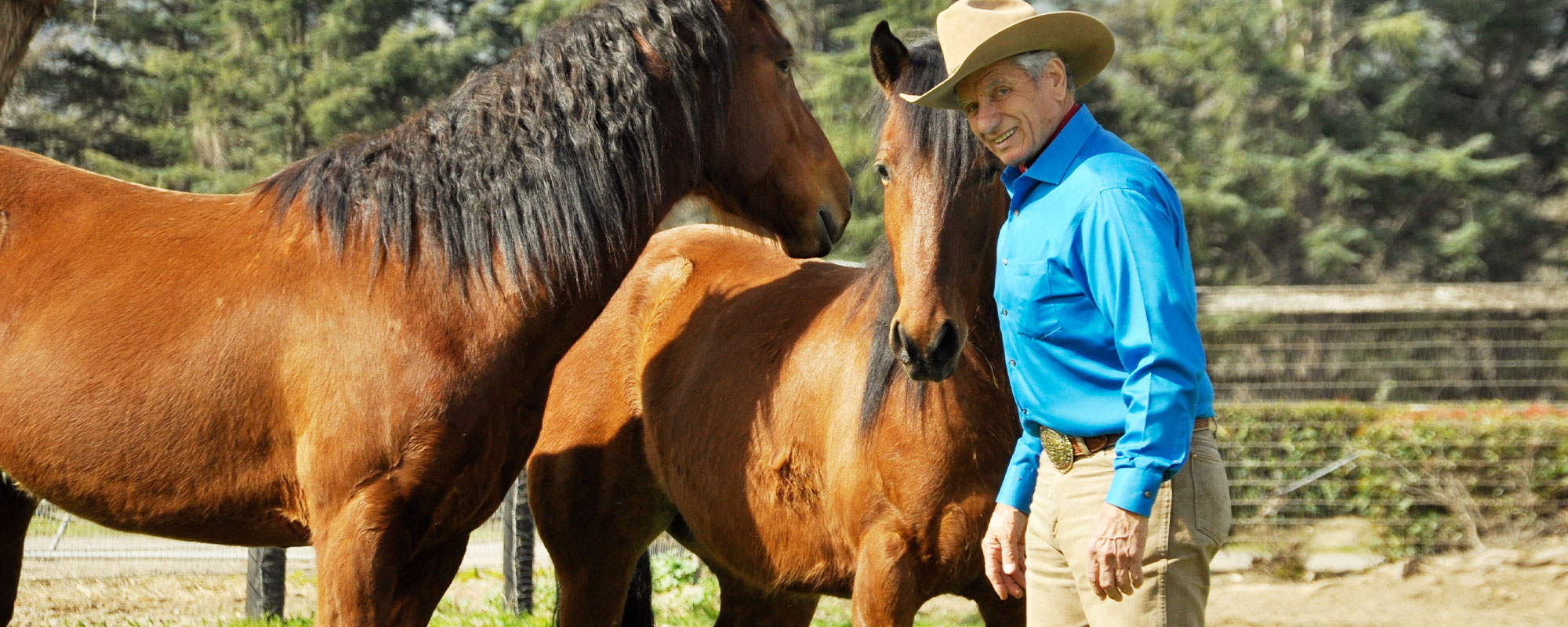
Sao Paulo, Brazil: American Trainer, Monty Roberts, is known worldwide for his gentle taming method which establishes a connection with the animal and does not require brute force.
Under the eyes of the audience at the largest event of its kind in the world, the “horse gentler” American trainer Monty Roberts took approximately one hour to tame a horse which had never been ridden, on the opening night of the Rodeo International in Barretos, Brazil.
The approximately four-year-old horse was only trained to lead before this night. The wild animal came from the Northeast territories of Brazil and the American trainer noted that he had never seen horses of this type in his life.
But he wasn’t daunted by the challenge. His gentle taming method proved, once again, to be effective, precisely opposing the aggressive methods used by his father. “My father was much harsher than any father should be,” said the trainer before starting the presentation.
His father used abusive techniques to tame the horses on the ranch where they lived in California. Unlike him, Monty Roberts never wanted to impose himself on the animal.
“I don’t want to be the boss, I want to be the partner”, he said.
Connection and Cooperation
Precisely for this reason, the trainer dedicated himself to understanding the communication system of the horses which is gestural using body language to train them. He calls this Equus and it sets up trust with the animal, creating a connection and cooperation.
To perform the presentation, the team of Certified Instructors, Brazilians Waldo Franco and Miguel Lupiano as well as German Denise Heinlein set up a round in the middle of the arena for the trainer to demonstrate his methods.
“I want Canário to be happy here”, he said of the horse.
The noise from the huge Festival Park was a factor that made the task difficult, as it scared the animal. “I would like everyone to be very quiet, but that may be impossible in Brazil”, the trainer said with a smile.
Though it was never completely quiet, the audience, or a good part of it, collaborated and even adopted the “claps” by shaking their hands instead of clapping them.
Join-Up® The Method developed by the American Monty Roberts to tame horses in a gentle way; without using violence
The taming began with a small caress on the animal’s fore head. The first phase is called the ‘Join-Up’ and starts with the trainer near the round pen’s fence, releasing the lead rope from the horse’s halter. He let Canário go freely around the pen. The aim of this stage is to gain the trust of the horse.
With his body posture, Monty Roberts was convincing the horse to travel one direction and then the other. He noted that one of the animal’s ears was “locked” on Roberts, which indicated that the animal was paying attention to the trainer. Gradually, the horse slowed down, starting to relax and lower its head toward the ground.
Soon came what the gentler explained were the main signs that the horse was relaxed: he began to lick and chew. “I’ll walk away, and he’ll follow,” said Monty Roberts. No sooner said than done. The audience began to applaud, but the trainer reminded them that it was necessary to be silent, not to scare the horse.
Desensitization
The trainer started the second part of the gentling and asked the team to bring plastic bags on a handle to carry out the desensitization process. This step consists of causing the horse to lose its fear of objects approaching it.
Monty Roberts lightly passed the object on both sides of the animal so that he understood that no violence would be used there. “It’s to show him that I mean no harm,” explained the trainer.
With the object, he simulated movements of a rider climbing and jumping on his back. Soon, Monty Roberts requested a saddle, the first of the horse’s life.
With the help of Denise Heinlein, the main instructor at the Monty Roberts method teaching center in Europe, the horse was soon saddled. The process, which usually takes a few weeks, with the American happened in minutes.
After a few laps, Monty Roberts requested light reins and a leather piece to hold the stirrups to show the horse how to follow the eventual rider’s directions. Meanwhile, the trainer walked the horse around the circle, and with each ‘cluck’ the animal trotted faster.
The First Ride
After Monty Roberts taught the rein cues, it was time for Canário to receive his first rider. The volunteer was Thiago Mega, a bucking horse champion from Barretos. He wore a helmet, at the horse gentler’s request for safety.
The rider, guided by the trainer, caressed the horse between the eyes and the trainer started to lift the rider, up and down, but not yet mounting, “To show him that climbing on won’t hurt him,” explained the American.
In a short time, Thiago was mounted on the horse. However, as expected, the horse got scared and kicked a few times. The experienced rider did not take long to see that it was time to slide off and reassure the animal.
It wasn’t time to give up. The first rider ended up being Zé, a mannequin rider made and named for the Barretos Equine Event by Monty Roberts himself. After tying Zé to the saddle, he released the animal to walk freely and to understand that none of this would hurt him.
After a few minutes with the first crash-proof rider, Thiago Mega was able to mount again and take the horse for a quiet ride around the pen, easily.
This time, it wasn’t just the horse that was delighted: the audience held back the applause until the animal exited the round pen, and then the applause was only briefly interrupted when Monty Roberts did 88 push-ups – one for each year of his life, while the audience counted along.
MONTY ROBERTS AVAILABLE FOR SELECT INTERVIEWS:
The New York Times bestselling author and world-renowned horse trainer Monty Roberts is available for interviews.
MONTY ROBERTS first gained widespread fame with the release of his New York Times Best Selling book, The Man Who Listens To Horses; a chronicle of his life and development of his non-violent horse training methods called Join-Up®.
Monty grew up on a working horse farm as a firsthand witness to traditional, often violent methods of horse training and breaking the spirit with an abusive hand. Rejecting that, he went on to win nine world’s championships in the show ring. Today, Monty’s goal is to share his message that “Violensace is never the answer.”
Roberts has been encouraged by Her Majesty Queen Elizabeth II with the award of the Membership in The Royal Victorian Order, as well as becoming Patron of Join-Up International. Other honors received were the ASPCA “Founders” award and the MSPCA George T. Angell Humanitarian Award and FEI’s Man of the Year.
Monty was recently included as Horse and Hound Magazine’s Top 50 Horsemen of All Time. Monty is credited with launching the first of its kind Equus Online University; an interactive online lesson site that is the definitive learning tool for violence-free training.
JOIN-UP philosophies can be seen at work with both humans and horses across the world, from farms to major corporations. To learn more about Monty Roberts or the many applications of his Join-Up training methods, visit www.montyroberts.com.
Horse Sense and Soldiers aired on Discovery Military in 2010 highlighting the therapeutic effect horses and Monty Roberts’ Join-Up® have on PTSD. Soon after Monty and his team developed the Horse Sense & Healing program for veterans and first responders.
Lead-Up International was officially launched worldwide at the Monty Roberts International Learning Center in Solvang, California, in February 2017. The purpose of Lead-Up International is to reduce violence in the community by creating peaceful leaders from vulnerable youth utilizing equine-assisted therapy and non-verbal communication, building trust-based relationships.
This article originally appeared on MontyRoberts.com and is published here with permission.
There are more interesting articles in our section on Clinicians & Trainers.
- Body Condition Index: New Tool for Objectively Assessing Body Fat in Horses
- 5 Gaits of the Icelandic Horse (2:24)
- Respect the Power of the Horse's Instincts
- Rood & Riddle Stallside Podcast - Pioneering Equine Podiatry with Dr Scott Morrison (38:49)
- Time for a Change: Overwhelmed by the Pyramid? Try the Spiral!
- Three Supplements All Horses Need
- Monty Roberts' Join-Up in Brazil at the Barretos Rodeo Festival 2023 (2:54)
- Biomechanics Experiment: The Equine Spine - Neutral vs. Engaged
- What To Do If Your Horse Is Sick - A Checklist
- Good Riding Position with Ken Najorka (8:07)
- Horse Hoof Cracks 101
- Rood & Riddle Stallside Podcast - The Cost of Horse Ownership with Kate Hayes and Deb Reeder
- Equestrian Sports in Schools: Fostering Discipline, Teamwork, and Leadership Skills
- Adjusting the Rope Halter with Julie Goodnight (5:34)
- Safely Adjust Stirrups and Girth While Mounted on English Tack
- Types of Western Saddles, Explained
- Know Thy Forage: Ten Forage-Related Terms That May Be New To You
- The Emergency Stop with Julie Goodnight (3:05)
- Sample Lesson on First Trot with Andrea Boone (16:49)
- Horse Heatstroke and Exhaustion