





Health & Education
We all want the best care possible for our horses. The Heath & Education section covers both Learning Institutions, Organizations as well as many sources for equine assistance including Veterinarians and Farriers.
For those who want a to formally study horses, the Education section includes College Riding, Equine Studies, and Veterinary Schools. Learn about the wide variety of horses in the Horse Breeds section. Supplements and Treatments Therapy are also included in the section.
Everyone can learn from Fine Art and there are some specialty Museums that might surprise you.
Horses as a therapy partner enrich the lives of the disabled. These facilities are listed in our Therapeutic Riding section. To help children and young adults build confidence and grow emotionally, please see the resources available on the Youth Outreach page.
Looking for a place to keep your horse? You can find it in the Horse Boarding section. Traveling? Find a Shipping company or Horse Sitting service if your horse is staying home!
Want to stay up to date with the latest training clinics or professional conferences? Take a look at our Calendar of Events for Health & Education for the dates and locations of upcoming events.
Do we need to add more? Please use the useful feedback link and let us know!
By Tony Hawkins, DVM, Valley Vet Supply Technical Service Veterinarian
Just like with people, horses are more likely to combat respiratory challenges in the colder months. Besides the drop in temperatures alone, other contributing factors include the drier air and decreased immune function in the lungs. When we’re looking at respiratory challenges impacting horses, the greatest risks include equine influenza, Rhinopneumonitis (Rhino) and strangles. To help horse owners understand each, we’re looking at these three conditions closely within a three-part article series – covering aspects from disease spread to signs, treatment considerations and prevention. Let’s begin with the topic of equine influenza.
Background
The equine influenza H7N7 subtype was first reported in the 1950s and last reported in the 1970s. The Centers for Disease Control and Prevention reports “[H7N7] is now considered to be extinct. The EIV H2N8 subtype was first reported in horses in the United States in the 1960s and still spreads in horses globally today.”
Equine influenza is spread from horse to horse through contact with infectious nasal secretions. This can occur through direct, nose-to-nose contact with an infected horse. Coughing is also a very common cause of spread, as well as contact with what we call fomites – meaning inanimate objects like feed buckets, brushes, tack, clothing and hands – that have those nasal secretions on it. It's been reported that a horse’s cough can travel as far as 150 ft, so it doesn't have to be nose-to-nose contact for this disease to spread. After horses are exposed, it's only a one- to three- day incubation time and should they become infected, they can shed for up to 14 days. Equine influenza attacks the normal immune functions of your horse’s lungs, which causes an increased susceptibility to secondary bacterial infection and bacterial pneumonia.
Signs
A cough is a pretty classic sign of flu. Horses also may demonstrate fever, nasal discharge, lethargy and loss of appetite. Some horses that become infected may not show any symptoms; they are called asymptomatic shedders.
Treatment
Most importantly, horses will need rest and supportive care, which will differ a little bit from horse to horse and case to case. Rest is very important. You don't want to exercise those horses or add any stress because that just makes things worse. The most common recommendation from the experts is to provide one week of consecutive rest for every day of fever, even if they start feeling better before that rest period is over. For horses experiencing fever or secondary bacterial pneumonia, non-steroidal, anti-inflammatory medications and antibiotics would be needed. Work closely with your veterinarian on treatment options available.
Prevention
To prevent equine influenza, consider the steps we take to shield ourselves from the flu.
Vaccination plays a very important role in prevention of disease. Should vaccinated horses become exposed, either one, it's not as serious should they become infected, or two, the vaccine will hopefully prevent the disease from taking hold. As for vaccination timing it really comes down to a few things – the immune status of the horse and the risk of exposure. I recommend annual vaccination for horses with lower risk and twice-a-year vaccination – every six months – for horses with high risk of exposure or those who may have questionable immune status.
The following groups of horses I would consider high risk and recommend they receive twice-yearly vaccination:
- Young or senior horses
- Horses traveling frequently or have exposure to those who do
- Those residing in boarding/training barns with frequent new arrivals
Cleaning is very important when you're caring for animals. Clean and disinfect your tack, buckets and anything that your horse or others could come in contact with. If you have any sick animals on the premises, you really need to care for the healthy ones first and then care for the sick ones last, so you don't pick up the infectious materials and take it to your healthy horses.
New arrivals need to be quarantined for at least two weeks from your resident horses. And if you take your horse somewhere else and then come back home, quarantine that horse away from your other horses at home for at least two weeks.
Through vaccination and best management practices, you can help prevent your horse from equine influenza risk. Stay tuned for part two of this series.

About the author: Valley Vet Supply Technical Service Veterinarian, Tony Hawkins, DVM, attended Kansas State University’s College of Veterinary Medicine. In addition to his role on the Technical Service team at Valley Vet Supply, Dr. Hawkins owns a mixed-practice veterinary clinic in Northeast Kansas and is treasured by the community for his care across species. He is greatly involved in cattle health, including processing and obstetrical work, as well as providing hands-on care for horses and pets through wellness appointments and surgery.
All photographs and images courtesy of Valley Vet.
This article originally appeared on Valley Vet and is published here with permission. Valley Vet Supply was founded in 1985 by veterinarians for people just like you - people who want the very best for their four-legged friends and livestock.
There are more informative articles in our section on Health & Education.
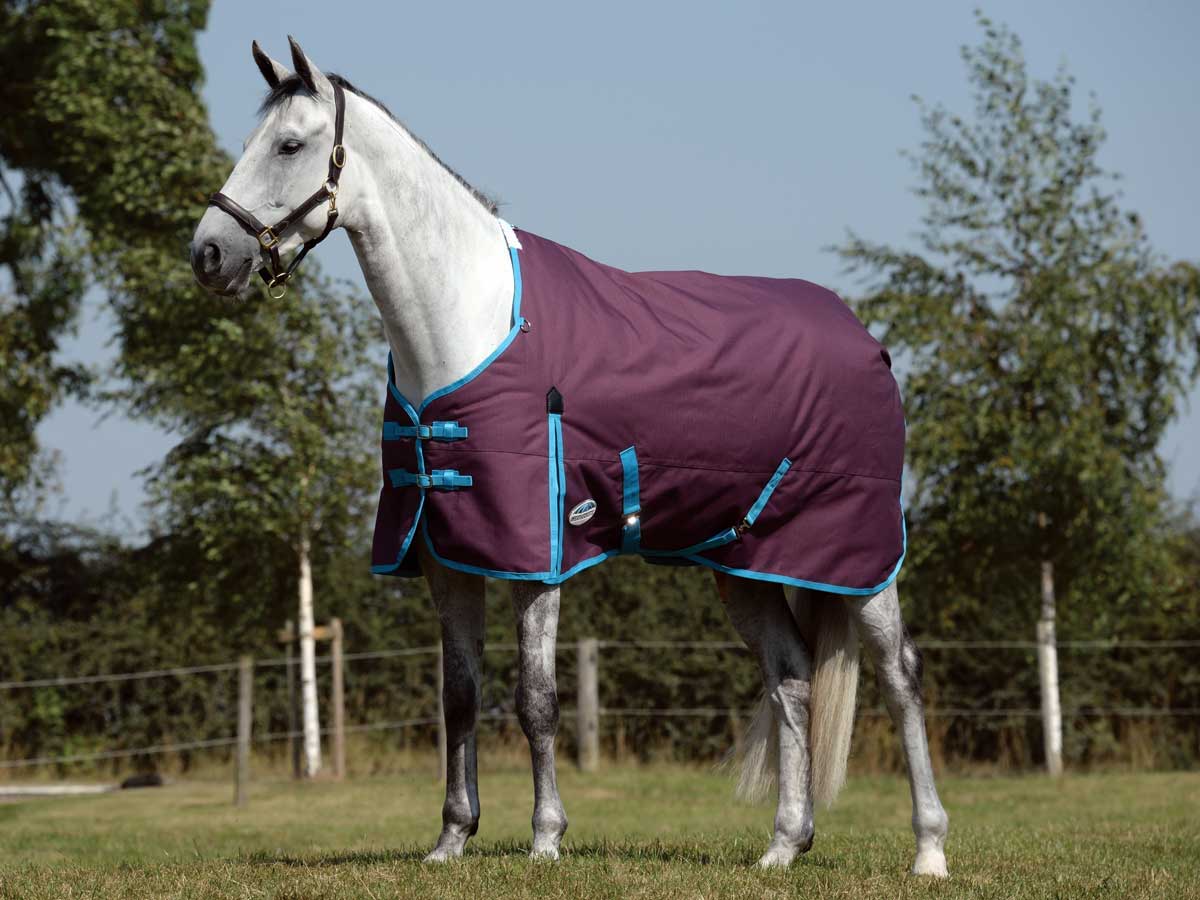
We understand that blanketing horses can seem overwhelming. But take a deep breath, friends, we’re here to help simplify with this in-depth but simplified horse blanketing guide. Continue reading for understanding of reasons to blanket horses, different horse blanket types, sizing horse blankets, cleaning horse blankets, helpful tips and more!
First, Why Horses Are Blanketed
There are two main reasons horse owners blanket their horses and ponies:
- To keep horses sleek for the show ring
- To provide comfort during inclement weather conditions
Different Horse Blanket Types & When to Wear Each
There is much to consider when selecting a horse blanket, details such as age, body condition and coat thickness. Additionally, horses across the country experience a variety of climates, weather conditions and stabling environments. Luckily, just as your closet holds clothes tailored to the day and season, there are different types of horse blankets available, too, so you can select just what your horse needs when he needs it.
Let’s first look at a few horse blanketing basics -- sheets vs. blankets and turnout vs. stable. How familiar are you with the differences between each?
Sheets vs. Blankets
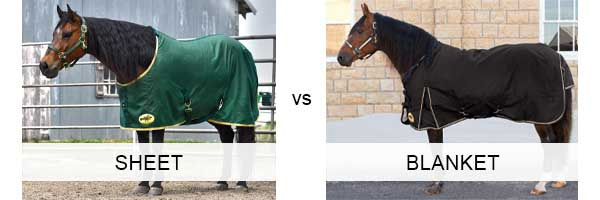
A horse sheet is lightweight and is perfect for those mildly cold or windy days. They have no fill.
A horse blanket offers fill, which is essentially a form of insulation sewn into the blanket to add warmth (think of your poufy winter coat!) The higher the fill number on a blanket, the cozier the pony on those cold days.
Turnout vs. Stable
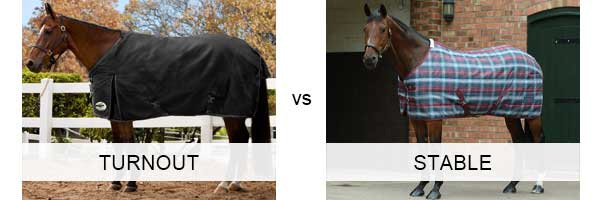
Sheets and blankets come in two varieties: turnout and stable. To put it simply, turnout sheets and turnout blankets are intended for horses at turnout. They will feature waterproof material to keep pasture ponies dry. Without waterproof technology, a wet horse blanket could only make your horse colder, which is of course not what was intended!
Stable sheets and stable blankets are ideal for horses kept inside a stable and are not made from waterproof material. They serve an important purpose by keeping stabled horses comfy, warm and sleek.
Understanding Warmth & Durability
When you are selecting a horse blanket, you will notice a few number sets under the product descriptions, noting denier and fill.
Denier denotes the durability of a horse blanket or sheet. It measures nylon fiber density on the outer material of horse blankets. Denier ranges from 70 to 2400D. The higher the denier, the more durable it is for those tough-on-blanket horses (you might have one or two in mind!)
As we shared earlier, fill is padding that adds an extra layer of warmth to your horse’s blanket. Both with denier and fill, the higher the number, the tougher or warmer the blanket’s material will be.
Do you know the degree of blanket warmth your pony needs and when? We put together this easy-to-reference chart to help as a guide!
| Weather Conditions | Grams of Fill |
|---|---|
| 50-60° | Sheet (0g) |
| 40-50° | Light blanket (100g) |
| 30-40° | Light or medium blanket (150 to 250g) |
| 20-30° | Medium or heavy blanket (200 to 300g) |
| Below 20° | Heavy blanket (300 to 400g) |
Measure your horse for a blanket or sheet
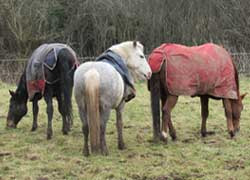
Did you know that wardrobe malfunctions happen to horses, too? It’s true! If a horse’s blanket or sheet isn’t properly fitted to him, it could slip off to the side, which could cause him to trip or tangle, possibly resulting in injury.
Learn how to measure a horse for a blanket with these quick and simple horse blanket sizing steps. When measuring your horse, start from the center of his chest and measure around the widest part of the shoulder, along the barrel and around the widest part of the hindquarter to the center of the tail. Keep your line horizontal to the ground. His blanket measurement will be the same as the number of inches measured. If the exact number of inches is not available to select from, size up to the nearest measurement.
5 Tips for the Perfect Horse Blanket Fit
Before buckling your horse’s new duds and sending him to the back field amuck, double-check your measurements to make sure the blanket is a perfect fit. First, put on the horse blanket, and check that:
- Fastened chest straps overlap slightly and fit snug but not too tight
- Surcingles fit loosely with about four fingers width between his stomach and the straps
- There is only one hand’s width between each leg strap on your horse’s thighs
- The end of the blanket stops just above where the tail starts
- Fabric is not pulling tightly against his shoulders or blanket hangs too low
Storing & Cleaning Horse Blankets
Properly storing and cleaning horse blankets and sheets will help them last.
You also can extend the life of your horse’s blanket by keeping it up off of the ground and away from opportunistic rodents who may look at your gorgeous new blanket as a home (or worse -- a snack!)
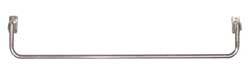
During the colder months, when you may appreciate quick access to your horse’s blankets, you can store blankets with blanket racks, which can hold several blankets at once, keeping tack rooms tidy and fluff-free. Or, you can look into individual solutions for blanket storage, such as a horse blanket wall rack to hang on your horse’s stall door or a blanket storage bag.
horse blanket rack
After your horse’s blankets have protected them from the rain, snow and the muck of cold weather, it’s time for a good cleaning. You can either opt for cleaning horse blankets yourself, or, you can send them to a blanket laundry service.
Cleaning horse blankets may be easier than you think! Just follow these steps.
3 Steps for Cleaning Horse Blankets
- Pre-wash - Use stiff brush to remove excess horse hair, mud and dirt. Hose off blanket, and hang to dry.
- Wash - Wash using a horse blanket detergent, such as Saddle Pad & Horse Blanket Wash by Absorbine.
- Dry - Hang horse blankets to dry in a shady area to avoid color deterioration of the material.
*Follow manufacturer’s cleaning instructions for best results.
Shop horse blankets for sale at Valley Vet Supply to ensure your horse is snug as a bug with a high-quality horse blanket or sheet that meets his specific needs.
All photographs and images courtesy of Valley Vet.
This article originally appeared on Valley Vet and is published here with permission. Valley Vet Supply was founded in 1985 by veterinarians for people just like you - people who want the very best for their four-legged friends and livestock.
There are more informative articles in our section on Health & Education.
- FAQ: Is Your Horse Choking?
- Every Horse Needs These Five Things (2)
- Every Horse Needs These Five Things
- Horse Gentler Monty Roberts Tames a Wild Horse In Front of 30,000 Brazilians
- Body Condition Index: New Tool for Objectively Assessing Body Fat in Horses
- 5 Gaits of the Icelandic Horse (2:24)
- Respect the Power of the Horse's Instincts
- Rood & Riddle Stallside Podcast - Pioneering Equine Podiatry with Dr Scott Morrison (38:49)
- Time for a Change: Overwhelmed by the Pyramid? Try the Spiral!
- Three Supplements All Horses Need
- Monty Roberts' Join-Up in Brazil at the Barretos Rodeo Festival 2023 (2:54)
- Biomechanics Experiment: The Equine Spine - Neutral vs. Engaged
- What To Do If Your Horse Is Sick - A Checklist
- Good Riding Position with Ken Najorka (8:07)
- Horse Hoof Cracks 101
- Rood & Riddle Stallside Podcast - The Cost of Horse Ownership with Kate Hayes and Deb Reeder
- Equestrian Sports in Schools: Fostering Discipline, Teamwork, and Leadership Skills
- Adjusting the Rope Halter with Julie Goodnight (5:34)
- Safely Adjust Stirrups and Girth While Mounted on English Tack
- Types of Western Saddles, Explained