



Health & Education
We all want the best care possible for our horses. The Heath & Education section covers both Learning Institutions, Organizations as well as many sources for equine assistance including Veterinarians and Farriers.
For those who want a to formally study horses, the Education section includes College Riding, Equine Studies, and Veterinary Schools. Learn about the wide variety of horses in the Horse Breeds section. Supplements and Treatments Therapy are also included in the section.
Everyone can learn from Fine Art and there are some specialty Museums that might surprise you.
Horses as a therapy partner enrich the lives of the disabled. These facilities are listed in our Therapeutic Riding section. To help children and young adults build confidence and grow emotionally, please see the resources available on the Youth Outreach page.
Looking for a place to keep your horse? You can find it in the Horse Boarding section. Traveling? Find a Shipping company or Horse Sitting service if your horse is staying home!
Want to stay up to date with the latest training clinics or professional conferences? Take a look at our Calendar of Events for Health & Education for the dates and locations of upcoming events.
Do we need to add more? Please use the useful feedback link and let us know!
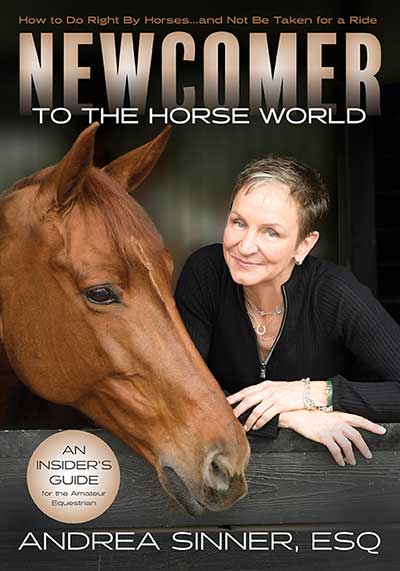
This excerpt is adapted from Newcomer to the Horse World by Andrea Sinner, Esq.,
Horses may be “just” a hobby to you, and certainly sometimes things happen that impact your ability to uphold your responsibilities. However, the best way to build a productive relationship with your barn is to fulfill three responsibilities fully and consistently as near to 100 percent of the time as possible.
• Time: A barn runs on a schedule. Know the hours they are open and abide by them unless there is a medical issue. When you have a lesson, be tacked up and ready to get on your horse at lesson start time. Only when you are capable and allowed to ride alone, you might also consider coming a bit early to have a longer warmup. But check with your trainer, as sometimes overlapping with an earlier lesson time is unhelpful.
• Attention: Pay attention to your horse (watch for bumps or scrapes, mood shifts, responsiveness when riding, and so on), your trainer (listen to what they’re saying, make sure you understand), your peers (if you are riding, it is your job to not run into anybody), your body (check your strength, balance, breath, mood, and so on), and your gear (all the things you need to take care of and ride your horse). When you’re new, it will seem overwhelming. Once you have practice, it will become more natural. In the early days, ask lots of questions, and pay attention as much as possible.
• Money: The simplest point here is to pay all your bills on time, every time, to everyone. If every member of a barn did this, things would run a lot more smoothly. Nobody wants to chase you for money; it’s not fun. And if you know you will be late, talk about it with the person you owe money to. It’s still not great, but at least they can try to plan around the negative impact to their cash flow. When you commit to something, ranging from a lesson to a show, know that if you back out at the last minute, you are still likely responsible for most, if not all, of your original financial commitment.
In addition to those three responsibilities, here is an attempt at nine principles to help you be a positive, constructive, and healthy part of your barn community.
• Take care of your horse. This remains job #1, so abide by everything below as long as it doesn’t conflict with caring for your horse.
• Say something if you see anything wrong with any horse. Even if you are incorrect about something being amiss—you will make mistakes in the early days, and likely forever—it is far better to say, “Is this right?” than to let it go and have something bad happen. Empty water bucket, stall door open, swollen leg, fly mask off one ear, blanket hanging mostly off the horse in turnout, anything…make a query to a responsible person.
• Mind your own business. Unless horse or rider safety is in question (see prior point), stay out of whatever is going on in the barn that you might find intriguing. This goes for junior meltdowns, terrible lesson happenings, a ridiculous choice in horse boot color, a dreadful mistake someone made in the ring…all of it. You have your values, other people have theirs. Let it be.
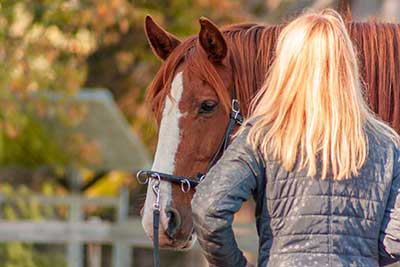
• Be kind to all the humans. All. Of. Them. Trainers, barn staff, grooms, farriers, vets, other riders, moms of other riders, visiting uncles of other riders, UPS delivery person, snow-plow person, hay-delivery person…everyone. Even in a small barn, you will meet a lot of people. 99 percent of them are hard-working people who love horses, even if some are a bit tired and jaded. Bond on the strength of that shared love of horses, and let any other concerns go.
• Be kind to all the horses. Do not feed horses that are not yours unless you have direct permission from their person, but being present and loving to every horse in the barn is always appreciated.
• Take care of your stuff. Keep your gear clean, put your stuff away, and clean up after your horse (including manure, hoof pickings, mane trimmings… all of it). Multiple trainer friends of mine requested repetition here: Put. Your. Stuff. Away. Sure, we all make mistakes and forget sometimes, but focus on this topic and apologize sincerely when you err.
• Wait your turn. If someone is talking to your trainer or barn manager or whomever, wait until they are done and then ask your question. Better yet, signal you want to chat, then walk away to give them some privacy.
• Wait, and be ready, for your turn in lessons. When you’re in a group lesson, let the trainer finish coaching the prior rider, but also be ready to go as soon as it is your turn. This can be like threading a needle; pay attention to the flow, and you’ll get in the groove.
• Share any barn concerns politely, privately, and early. Whether you are concerned about how your horse is being cared for or feel you’re not making as much progress as you like, you need to raise it politely and directly with your trainer or barn manager. This sounds obvious, but do not add your complaint to the petri dish that is the barn gossip machine. It doesn’t solve the problems and only makes it harder for the professionals trying to help you and your horse.
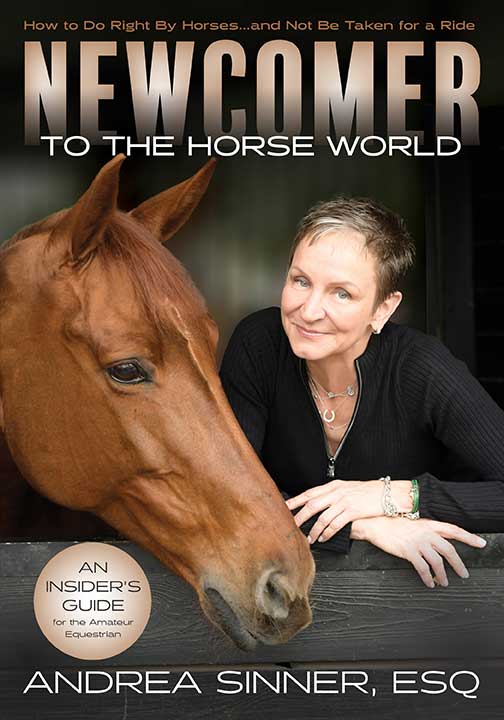 Newcomer to the Horse World: The Insider's Guide for the Amateur Equestrian
BUY NOW on Amazon
Paperback | Kindle
This excerpt is adapted from Newcomer to the Horse World by Andrea Sinner, Esq. and is reprinted here with permission from Trafalgar Square Books.
You can find more interesting reading in our section for Books. While you're here, check out our Curated Amazon Store for everything you need for a happy horse and rider.
Are you interested in promoting your business or sharing content on EIE? Contact us at info@equineinfoexchange.com

The Mounted Patrol Foundation (MPF) and the Woodside-area Horse Owners Association (WHOA!) are accepting applications for the $10,000 Woodside-area Equestrian Merit Scholarship Award. For the sixth year, this scholarship is jointly sponsored by the two organizations to support the continuing education of a high school senior who has demonstrated involvement in and a future dedication to equine-related activities. Community involvement and academic achievement will be considered, with a strong emphasis on financial need.
Application deadline is May 9, 2025, at 3:00 pm.
Eligible applicants are high school seniors involved in equine-related activities and residing in Bay Area Counties (Alameda, Contra Costa, Marin, Napa, San Francisco, San Mateo, Santa Clara, Santa Cruz, Solano, and Sonoma) who have been accepted to a continuing education program this fall. Such programs may include: college, university, trade school, or other educational programs.
Applicants will need to provide at least one reference letter from their teacher, instructor, counselor, or individual who can attest to their equine involvement. Up to three reference letters will be accepted.
Applicants will be required to show financial need by submitting a FAFSA (Free Application for Federal Student Aid) or equivalent documentation.
Applicants will provide transcripts showing their GPA.
The $10,000 Woodside-area Equestrian Merit Scholarship Award will be paid directly to the recipient’s continuing education program in support of the recipient’s tuition, fees, expenses, room, and/or board.
The scholarship will be awarded June 6, 2025.
Applications are available March 1, 2025 online at the Woodside-area Horse Owners Association. To learn more about the Mounted Patrol Foundation, please visit their website Mounted Patrol Foundation.
Both MPF and WHOA! share a deep interest in the next generation of equine-motivated individuals. The two organizations are committed to helping people further the interests of the equine community in their career, avocation or equine-related goals.
You can find more informative articles in our section on Health & Education. Be sure to visit our curated Amazon Store.
- Non-GMO is NOT Necessarily Safe
- Consider Beet Pulp Instead of Oats
- Five Tips About Dummy Foals
- The Role of Nutrition in Managing Muscle Disorders
- Secrets of Successful Riding Instructors
- Horse Veterinarians in Alabama
- Horse Veterinarians in Alaska
- Horse Veterinarians in Arizona
- Horse Vet in Arkansas
- Horse Veterinarians in California
- Horse Veterinarians in Colorado
- Horse Veterinarians in Connecticut
- Horse Veterinarians in Delaware
- Horse Veterinarians in Florida
- Horse Veterinarians in Georgia
- Horse Veterinarians in Idaho
- Horse Veterinarians in Illinois
- Horse Veterinarians in Indiana
- Horse Veterinarians in Iowa
- Horse Veterinarians in Kansas