





Health & Education
We all want the best care possible for our horses. The Heath & Education section covers both Learning Institutions, Organizations as well as many sources for equine assistance including Veterinarians and Farriers.
For those who want a to formally study horses, the Education section includes College Riding, Equine Studies, and Veterinary Schools. Learn about the wide variety of horses in the Horse Breeds section. Supplements and Treatments Therapy are also included in the section.
Everyone can learn from Fine Art and there are some specialty Museums that might surprise you.
Horses as a therapy partner enrich the lives of the disabled. These facilities are listed in our Therapeutic Riding section. To help children and young adults build confidence and grow emotionally, please see the resources available on the Youth Outreach page.
Looking for a place to keep your horse? You can find it in the Horse Boarding section. Traveling? Find a Shipping company or Horse Sitting service if your horse is staying home!
Want to stay up to date with the latest training clinics or professional conferences? Take a look at our Calendar of Events for Health & Education for the dates and locations of upcoming events.
Do we need to add more? Please use the useful feedback link and let us know!
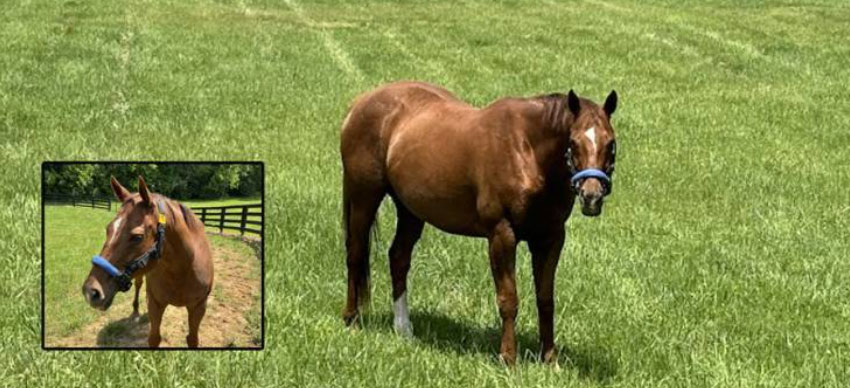
by Molly Todd, intern at Kentucky Equine Research.
Over the last year, Kentucky Equine Research has used chewing halters to record chewing frequency and to analyze the health and welfare of horses by observing behavioral changes during feeding.
The RumiWatch system was originally designed by a Swiss company to track rumination, grazing, standing, and other behaviors of cattle. Once the precision and accuracy of this technology was confirmed, the manufacturer designed a version for horses, called EquiWatch, which passed similar validation trials (Cunningham, 2018; Werner et al., 2020; and Weinert et al., 2020).
According to one research team, “the EquiWatch system can generate data necessary for more fully characterizing feeding behaviors in horses. Data output from the EquiWatch system can be used to determine the specific timing and duration of grazing activity as well as the vigor of pasture forage consumption over a selected interval” (Weinert et al., 2020).
The EquiWatch chewing halter features a sensor that detects pressure changes in an oil-filled tube within the noseband. The sensor is attached to a data logger on the cheekpiece of the halter. The halter also features a battery-powered three–axis accelerometer that detects changes in head position and temperature. All the components are watertight, so the halters can be used in field conditions.
Fitting the halters correctly is important for accurate data collection. The noseband must be adjusted three fingers’ width below the cheekbone and be snug around the muzzle so only two fingers can lie flat between it and the nose bridge.
The halters record data to an SD memory card. Data include time spent eating and the total number of chews, both of which can be split into whether the chewing was performed with the head up or the head down.
In previous studies using the chewing halters, researchers have collected data from horses eating only forage. Scientists at Kentucky Equine Research are now using chewing halters to investigate common feeds used in the management of horses. Chewing halters are fitted on the horses before they are fed a defined amount of feed. Following the completion of the meal, any spilled feed is collected to determine feed intake. From the data collected from the chewing halters, we can calculate variables such as chews per minute, chews per gram of feed intake, and rate of intake. We can compare these variables among feeds with different nutritional compositions, physical form (pellets versus cubes versus textured), and palatability.
Factors that may affect chewing (ingestive behavior) include particle length, elasticity, moisture, flavor, volume, and fracture volume. Animal behavior also plays a role in ingestive behaviors, such as age, preference, condition, previous experience, health status, and temperament.
Chewing starts both chemical and mechanical digestion of feedstuffs due to the production and mixing of saliva and reduction of particle size. Observing and understanding jaw movement can also help researchers better understand how to reduce stomach ulcers as well as assist with dentistry (Werner et al., 2016).
To learn more about the work done at Kentucky Equine Research using chewing halters, read this research abstract: Chewing Requirements and Glycemic Response of Fibrous Feedstuffs.
This article was written by Molly Todd, a year-long intern at Kentucky Equine Research. As part of the intern program, participants are asked to contribute to Equinews. Learn more about the internship program.
Reprinted courtesy of Kentucky Equine Research. Kentucky Equine Research is an international equine nutrition, research, and consultation company serving horse owners and the feed industry. Our goals are to advance the industry's knowledge of equine nutrition and exercise physiology, apply that knowledge to produce healthier, more athletic horses, and support the nutritional care of all horses throughout their lives. Learn more at Kentucky Equine Research.
There a more informative articles in our section on Health & Education. While you're here be sure to visit our Curated Amazon Store.
References:
Cunningham, M. 2018. Validation of the RumiWatch System to measure chewing activity of horses on restricted and ad libitum feeding systems. Thesis, University of Limerick.
Ellis, A.D. 2010. Biological basis of behaviour and feed intake. In: A.D. Ellis, A.C. Longland, M.
Coenen and N. Miraglia. 2010. The impact of nutrition on the health and welfare of horses. EAAP Publication No. 128, Wageningen Academic Publishers, pp. 53-74.
Weinert, J.R., J. Werner, and C.A. Williams. 2020. Validation and implementation of an automated chew sensor–based remote monitoring device as tool for equine grazing research. Journal of Equine Veterinary Science 88:102971.
Werner, J., C. Umstatter, N. Zehner, J.J. Niederhauser, and M. Schick. 2016. Validation of a sensor-based automatic measurement system for monitoring chewing activity in horses. Livestock Science 186:53-58.
To help reduce the risk of fire spreading in your stable, consider the following 7 principles when building or renovating:
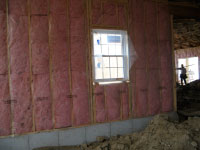
1. Construction Materials
Consider building materials that do not burn as readily
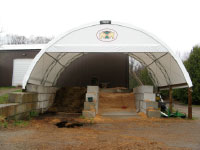
2. Compartmentation
Large open spaces will allow a fire to spread more easily vs. separate rooms
Separate mechanical and service rooms with doors with closers will reduce spread, as well as separate hay/bedding storage
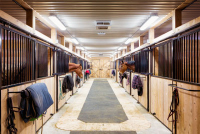
3. Means of Egress – Exits
Have at least 2 ways out of the barn
Uncluttered wide aisles will assist when exiting
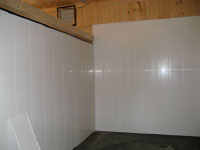
4. Interior Finishes
Type of material(s) used to cover walls, ceilings and floors can affect how far and fast the fire travels

5. Building Services
Ensure your services (i.e. electrical service, plumbing, heating and ventilation systems) are professionally installed and properly maintained
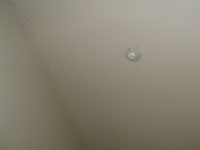
6. Fire Detection Systems
Consider smoke and fire alarm systems suitable for farms
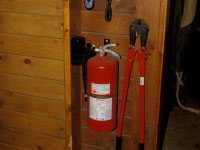
7. Fire Protection Services
Consider fire suppression systems, fire extinguishers and on-site water sources such as a pond accessible for fire department use
This article originally appeared on Equine Guelph, The University of Guelph and is published here with permission.
You can find more informative articles in our section on Health & Education.
While you're here, find some perfect items for your horse! Visit our curated Amazon Store.
- Top 3 Causes of Barn Fires
- Rope Halter Safety and Adjustment with Julie Goodnight
- Crafting Diets for Easy and Hard Keeper Horses - an excerpt from Helping All Horses Live Healthier Lives
- How Horse Show Culture Has Changed (and why it’s worth preserving)
- Listening Beyond Words: The Wisdom of Horses
- More than ‘Four on the Floor’ with Equine Guelph Horse Trailer Safety Course
- Skin Problems in Horses: Culicoides Hypersensitivity
- Osteoarthritis Pain in Horses Controlled by CBD and Related Products
- Review of Roaring & Possible New Surgical Procedure
- Encourage Horses to Drink During Transport
- Be Pro-active Rather than Reactive with Biosecurity
- Is Your Horse Happy?
- Setting Up Thoroughbreds for Success One Stride at a Time
- Five Things About Joint Care
- The Efficacy of Sponge Baths and Hosing on Exercise Recovery in Thoroughbred Horses
- Smarter Grazing: How Satellite Technology Supports Sustainable Horse Pasture Management
- Managing Energy and Motivation While Caring for Your Horses
- Five Tips for Hiring a Horse Shipper
- Tall Fescue Toxicity in Mares
- Healthy Joints for Years of Happy Trails