





Health & Education
We all want the best care possible for our horses. The Heath & Education section covers both Learning Institutions, Organizations as well as many sources for equine assistance including Veterinarians and Farriers.
For those who want a to formally study horses, the Education section includes College Riding, Equine Studies, and Veterinary Schools. Learn about the wide variety of horses in the Horse Breeds section. Supplements and Treatments Therapy are also included in the section.
Everyone can learn from Fine Art and there are some specialty Museums that might surprise you.
Horses as a therapy partner enrich the lives of the disabled. These facilities are listed in our Therapeutic Riding section. To help children and young adults build confidence and grow emotionally, please see the resources available on the Youth Outreach page.
Looking for a place to keep your horse? You can find it in the Horse Boarding section. Traveling? Find a Shipping company or Horse Sitting service if your horse is staying home!
Want to stay up to date with the latest training clinics or professional conferences? Take a look at our Calendar of Events for Health & Education for the dates and locations of upcoming events.
Do we need to add more? Please use the useful feedback link and let us know!
by Kentucky Equine Research Staff
Horses are "trickle-feeders” that naturally graze between 12 and 20 hours each day. However, modern management practices often require horses to be stalled for long periods of time, which may limit consumption and contradict natural grazing behavior.
Understanding how horses adapt their eating behavior under such management is essential for optimizing digestive health, welfare, and performance. Furthermore, the timing of forage consumption is especially relevant for performance horses that are often exercised early in the morning. Overnight feeding behavior therefore plays a particularly important role in gastric health. When horses consume forage, saliva is produced containing bicarbonate, which buffers gastric acid. A fiber mat is also formed in the stomach that floats on top of the gastric acid. This mat acts as a physical barrier, which may protect the nonglandular region of the stomach from acid exposure.
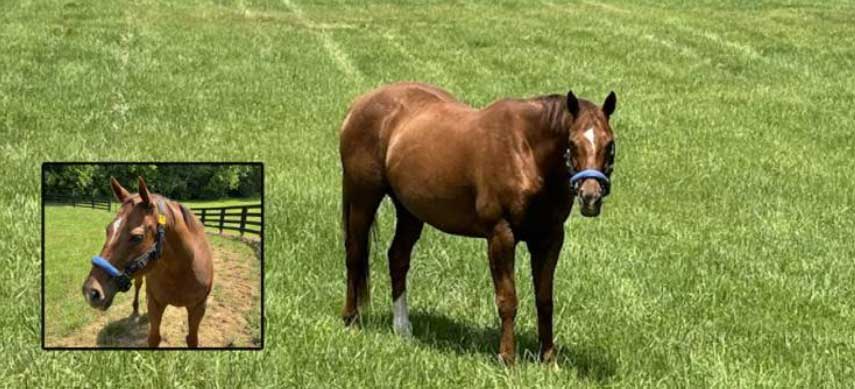
Kentucky Equine Research has recently used innovative technologies to investigate equine ingestive behavior. Chewing halters developed by Itin + Hoch allow researchers to quantify chewing time, frequency, and intensity to investigate the consumption behavior of horses. The chewing halters have previously been validated as a tool for tracking feeding behavior.
A recent study explored how horses chew overnight when offered free-choice timothy hay in one versus two hay nets within a stall using the chewing halters to continuously record chewing activity overnight. The study objective was to determine whether providing two forage access points would encourage more movement around the stall, spread chewing more evenly throughout the night, and increase total chewing time. The objective of the study was to encourage a more natural grazing behavior while stalled, and resulting patterns could tell us about equine behavior.
One of the main takeaways from this study was the strong influence of time-of-night on chewing behavior. Regardless of the number of hay nets provided, horses followed a consistent overnight rhythm of intake. Chewing activity was highest between 6:00 p.m. and 10:00 p.m., and gradually declined throughout the night, with a distinct resting phase from 9:00 p.m. until 5:00 a.m. when consumption was lowest. Intake increased before dawn again before their morning feed was given.
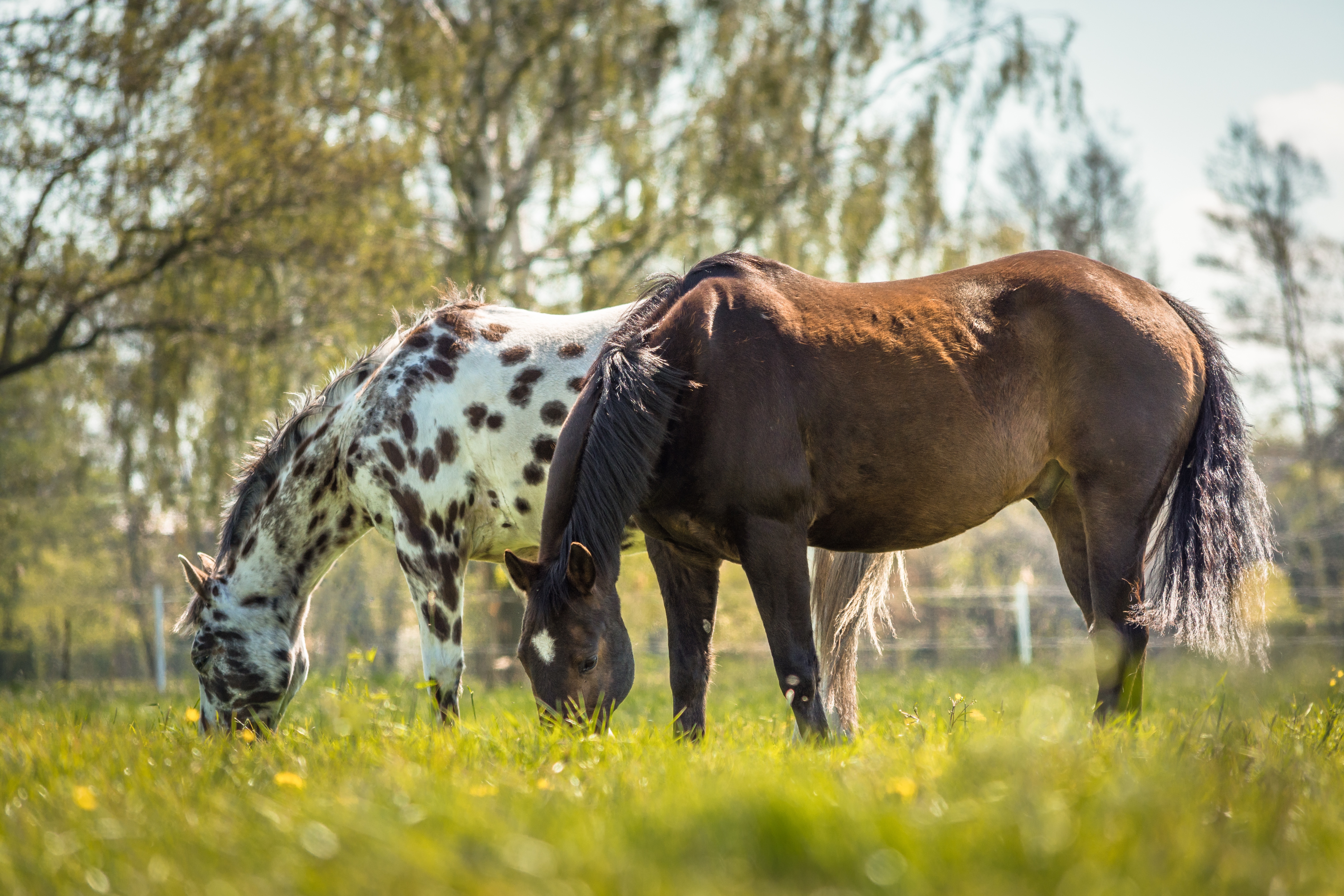
We may have our favorite breeds for various reasons. But what makes a breed versatile? The most versatile horse breeds are renowned for their ability to excel in multiple disciplines—from ranch work and trail riding to high-level English or Western competition—due to their athletic, intelligent, and calm nature. The top contenders include the American Quarter Horse, Thoroughbred, Morgan, Appaloosa, and Arabian, which are praised for adaptability and willingness to work.
The Top Most Versatile Horse Breeds
- American Quarter Horse: Often considered the most versatile breed, these horses excel in sprinting, ranch work, reining, and pleasure riding. They are valued for their calm demeanor, "cow sense," and intelligence, making them ideal for all skill levels.
- Thoroughbred: Known for immense athleticism, heart, and speed, they are not only premier racehorses but also excel in jumping, eventing, and polo. There is a huge Off Track Thoroughbred (OTTB) community for those who adopt a Thoroughbred after their racing career is over.
- Morgan Horse: Known as America’s First Breed, this compact, sturdy, and highly trainable breed is known as a great all-around family horse, capable of working in harness, jumping, and dressage.
- Appaloosa: Famous for their unique, spotted coats, they were bred by the Nez Perce for stamina and versatility, excelling in western riding, endurance, and trail riding.
- Arabian: One of the oldest breeds, they are prized for their immense endurance, intelligence, and stamina, making them top contenders in endurance riding and racing, dressage, and show jumping.
- Tennessee Walking Horse: Famed for their smooth, natural gaits, they are used for both high-end show work and comfortable trail riding, combining stamina with a gentle nature.
- Andalusian: Known as the "Cadillac" of horses, they are intelligent, noble, and versatile, excelling in dressage, driving, and exhibition.
- Haflinger: These small, chestnut horses are renowned for their gentle, willing nature, making them perfect for therapeutic riding, vaulting, and light draft work.
Why These Breeds Are Versatile
- Temperament: Most of these breeds are known for being willing to please, calm, and intelligent, making them easy to train for different tasks.
- Athleticism: They possess a blend of strength, stamina, and agility.
- History/Breeding: Many of these breeds were originally developed for rugged, multi-purpose work—such as ranching (Quarter Horse/Appaloosa) or travel (Arabian)—requiring them to be sure-footed and dependable.
- Adaptability: They are well-balanced, allowing them to compete in both English and Western disciplines.
What is your favorite and why? Let us know on Facebook, X, Instagram and Bluesky!
You can find more interesting articles in our section on Health & Education.
Are you interested in promoting your business or sharing content on EIE? Contact us at info@equineinfoexchange.com
- Arthritis in Horses: Use of Intra-Articular Nanogels
- Adjusting the Stirrups and Girth While Mounted with Serena Heppes
- Hay Nets and Slow Feeders for Horses: Pros and Cons
- Promise of Spring: Seasonal Changes in the Dietary Management for Horses
- What is the Average Horse Size? Which Horses Were the Tallest & Smallest?
- What are the Top 5 Most Popular Horse Breeds?
- What is the Lifespan of a Horse and Which Horse Breeds Live the Longest?
- How to Identify Horse Breeds!
- Are Donkeys Good Horse Companions? Learn More!
- The Essential Horse Care Tips
- Tips to Keep Horses Safe in Ice and Snow
- Adjusting Horse Diets in Winter: Is It Necessary?
- The Impact of Light on Horse Reproduction With Dr. Barbara Murphy
- The Overweight Horse – A New Year’s Resolution
- Survey Reveals Emotional and Practical Challenges in Managing Horse Weight
- Why Did My Horse Just Do That?
- Staying Warm This Winter - WSI Sportswear at Equine Affaire 2025
- A Guide for Livestock and Equine Grooming
- How Feeding Routine, Age and Workload Affect Joint Supplement Needs
- Vitamin E Requirements and Testing Recommendations in Horses