



Health & Education
We all want the best care possible for our horses. The Heath & Education section covers both Learning Institutions, Organizations as well as many sources for equine assistance including Veterinarians and Farriers.
For those who want a to formally study horses, the Education section includes College Riding, Equine Studies, and Veterinary Schools. Learn about the wide variety of horses in the Horse Breeds section. Supplements and Treatments Therapy are also included in the section.
Everyone can learn from Fine Art and there are some specialty Museums that might surprise you.
Horses as a therapy partner enrich the lives of the disabled. These facilities are listed in our Therapeutic Riding section. To help children and young adults build confidence and grow emotionally, please see the resources available on the Youth Outreach page.
Looking for a place to keep your horse? You can find it in the Horse Boarding section. Traveling? Find a Shipping company or Horse Sitting service if your horse is staying home!
Want to stay up to date with the latest training clinics or professional conferences? Take a look at our Calendar of Events for Health & Education for the dates and locations of upcoming events.
Do we need to add more? Please use the useful feedback link and let us know!
In this StallSide episode, Sarah Myer Thompson of MG Biologics sheds light on the science behind equine plasma and its impact on equine health. Joined by co-hosts Dr. Bart Barber and Dr. Peter Morresey, this discussion unravels scientific factors influencing the effectiveness and healing capabilities of equine plasma, offering a deeper understanding of its role in elevating equine healthcare.
By Kentucky Equine Research Staff
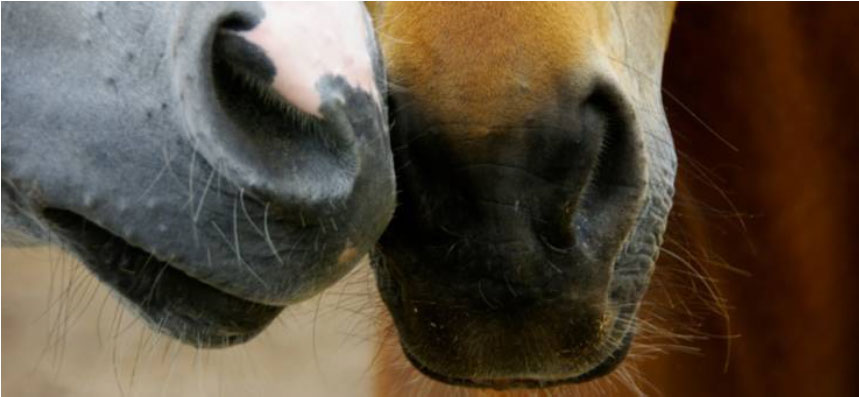
Domestication means that horses, in general, have decreased pasture access, less time with other horses, and very different feeding practices compared to their undomesticated peers. To maximize the welfare of managed horses and avoid unwanted behaviors, owners may implement various environmental enrichment strategies. While big, bouncy balls may immediately spring to mind, olfactory stimulation is a more subtle form of sensory enrichment.
Experts believe horses have a well-developed sense of smell. Using odors to enrich a horse’s life may therefore prove to be an inexpensive, simple means of providing stimulation or fostering quietness.
“Olfactory stimulation may increase behavioral diversity, allowing horses to behave more naturally, to deal with stresses and challenges, and to stimulate species-typical behaviors,” explained Catherine Whitehouse, M.S., nutrition advisor for Kentucky Equine Research.
According to a recent review on olfactory stimulation in horses, some smells may prove valuable in modern horse management.*
- Other horses’ odors: Horses commonly greet one another nose-to-nose and nose-to-body, so body odors are relevant for social contexts. When horses are in isolation—when trailering to an event alone, for example—providing a cloth that was rubbed on a familiar horse’s coat may help calm the horse during this time of stress.
- Equine-appeasing pheromone: The equine-appeasing pheromone may also be calming in stressful situations. “This pheromone is released by nursing mares. It reportedly provides reassurance to the foal, helping it feel safe, protected, and confident in novel situations. Synthetic versions of the equine-appeasing pheromone may help all horses, not just nursing foals,” advised Whitehouse.
- Essential oils and plant-derived odors: One published study showed that lavender decreased heart rate, alert postures, defecation secondary to stress, and salivary cortisol levels. “Lavender is perceived as the best-documented calming essential oil; however, spikenard, a perennial herb from the Himalayas, and roman chamomile were both found to be better at inducing relaxation than lavender in one study,” Whitehouse added. “That said, another found that chamomile did not consistently show a consistent relaxing effect.” Other essential oils tested in horses with variable results were cedarwood and peppermint.
More research on the role of olfactory stimulation in enriching horses’ environments is warranted. This may help horses deal with various stresses in their lives such as social isolation and the introduction of novel objects or new environments.
“Horses are exposed to many stressors in their daily lives, many of which may not be fully appreciated by owners. Stress can lead to a plethora of digestive issues and can affect the immune system as well as the microbiome through the concept of the ‘gut-brain axis,’” said Whitehouse.
She added, “Dietary imbalances or nutrient gaps may be exacerbated under stressful situations, so it cannot be overstated how important it is to provide a complete and balanced diet.”
Digestive support can help neutralize excess acid in the digestive tract and support the microbiome when potential stressors can be neither removed nor minimized in the horse’s environment. EquiShure is a time-released buffer that helps maintain an appropriate pH in the hindgut, thereby stabilizing the microbiome.
Read more: Olfactory Stimulation Enriches Horses’ Environments
- Whole Food Options to Boost Protein Quality
- Monty Roberts Gentling Your Spooky Horse (4:17)
- The Biomechanics of Engagement :The Essential Components of Self Carriage (18:19)
- Monty Roberts: A Real Horse Whisperer (49:43)
- Julie Goodnight: Don't wear a bike helmet for horseback riding (0:30)
- Julie Goodnight: Quick Tip to Stay out of Horse's Kick Zone, CHA (0:29)
- The Uniqueness of Icelandic horses, Part 2 (7:15)
- Beyond Dust Reduction: Soaking Hay Improves Lung Function
- Air Quality and Air Pollution’s Impact on Your Horse’s Lungs
- Restricting Forage is Incredibly Stressful
- Reading the Horse's Vital Signs with Teddy Franke (1:43)
- The Uniqueness of Icelandic horses - Part 1 (8:02)
- Blanketing the Horse Safely with Tammi Gainer (8:35)
- Riding Exercises to Improve Rider Position with Christy Landwehr
- Why Wear a Helmet? Riders Share Harrowing Close Calls
- Monty Robert's 88th Birthday - Cutting (43:03)
- Good Riding Position with Ken Najorka (8:06)
- Four Signs of a Happy Horse
- Seedy Toe White Line Disease
- Core Conditioning for Horses - Book Trailer