





Health & Education
We all want the best care possible for our horses. The Heath & Education section covers both Learning Institutions, Organizations as well as many sources for equine assistance including Veterinarians and Farriers.
For those who want a to formally study horses, the Education section includes College Riding, Equine Studies, and Veterinary Schools. Learn about the wide variety of horses in the Horse Breeds section. Supplements and Treatments Therapy are also included in the section.
Everyone can learn from Fine Art and there are some specialty Museums that might surprise you.
Horses as a therapy partner enrich the lives of the disabled. These facilities are listed in our Therapeutic Riding section. To help children and young adults build confidence and grow emotionally, please see the resources available on the Youth Outreach page.
Looking for a place to keep your horse? You can find it in the Horse Boarding section. Traveling? Find a Shipping company or Horse Sitting service if your horse is staying home!
Want to stay up to date with the latest training clinics or professional conferences? Take a look at our Calendar of Events for Health & Education for the dates and locations of upcoming events.
Do we need to add more? Please use the useful feedback link and let us know!
By Kentucky Equine Research Staff
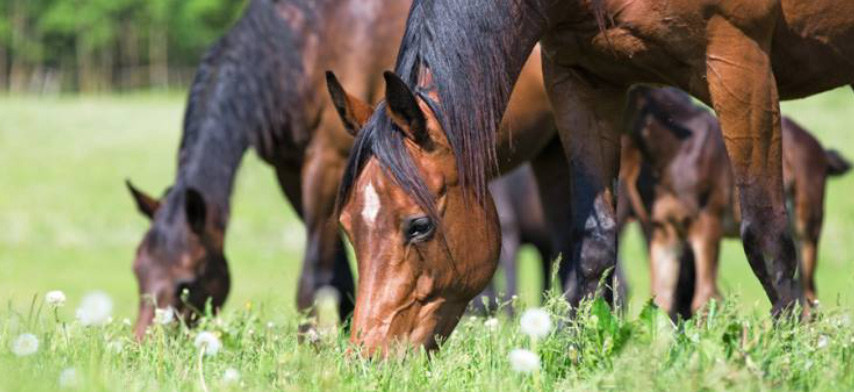
In Arthur Conan Doyle’s The Hound of the Baskervilles, the renowned fictional detective Sherlock Holmes assesses the quality of a portrait by stating simply, “I know what is good when I see it.” For some horsemen, high-quality pasture may be viewed in the same way—difficult to describe but easy to identify.
What attributes separate high-quality pasture from middling or poor pasture? Some characteristics include species and growth stage of plants, density of desirable plants, weed population, and presence and extent of sacrificial areas. These barren areas are often found around feeders, waterers, or fencerows because of high traffic.
Pasture quality is often intrinsically linked to pasture care. Are soil tests conducted to inform owners how to fertilize? Are pastures mowed and dragged regularly? Are weed-control measures performed?
Kentucky Equine Research prompts horse owners to complete a detailed form when they request a ration evaluation. Every component of a horse’s diet must be depicted accurately. One question asks owners to describe their pastures in one of five ways: drylot, sparse, moderate, lush, or high in oxalates. By knowing the quality of pasture, especially the availability of forage, nutritionists can estimate potential intake levels and the nutrient contribution to the diet.
Drylot. A drylot is any area where horses are turned out and able to move around freely, but the area contains no forage. Drylots are often sand or gravel runs connected to a stall or turnout paddock. A drylot is ideal for horses that must consume carefully regulated diets such as easy keepers or those diagnosed with certain metabolic diseases. Horses with drylot turnout only will be entirely dependent on supplemental forage sources such as hay, chaff, forage cubes or pellets, or alternative fiber sources. If horses spend more than an hour or two in a drylot, forage should be provided to them.
Sparse pasture. Sparse pasture provides some forage for horses, though quality may be poor. The forage may be overmature, which can be determined by the presence of thick stems and seedheads, or it may be yellowing or brown, as in the case of drought-stricken plants. Sparse pasture may be due to overgrazing, which often leads to a flush of weed growth. Sacrificial or loafing areas may start small but spread wider, giving weeds a chance to take a foothold. Sparse pasture may also be due to inappropriate management, such as infrequent mowing, inadequate weed control, or lack of fertilization. This pasture will not support optimal dry matter intake per day but may be appropriate to meet the needs of easy keepers.
Moderate pasture. Moderate pastures may have a mix of grasses interspersed with weeds. Pasture will be unevenly grazed but will have minimal bare spots. Plant height will typically be inconsistent. Moderate pasture generally does not have consistent care with some mowing and minimal or no fertilization. Like sparse pasture, moderate pasture will not support the maximum dry matter intake per day.
Lush pasture. Lush cool-season pasture contains thick stands of grasses with few or no bare areas and even distribution of grazing across the pasture with minimal weed proliferation. Plants are kept at a height of 6-10 inches by regular mowing. This pasture will support maximum rate of dry matter intake. Cool-season grasses grow best during cool, moist periods of the year, such as in spring or autumn. They thrive in the temperature range of 59-77° F. Common cool season grasses include tall fescue, orchardgrass, ryegrass, Kentucky bluegrass, and bromegrass. Warm-season grasses grow best during warm periods of the year, flourishing when temperatures are in the range of 86-95° F. Bermudagrass and bahiagrass are typical warm-season grasses. When grasses are faced with temperatures outside of their ideal range, growth may slow considerably, decreasing yield.
Legumes such as clover, lespedeza, and alfalfa are most often used in pastures as components of mixes with grasses. Both grasses and legumes provide essential nutrients to horses, though legumes will convey more energy and protein as well as certain minerals.
The fifth category, high-oxalate pastures, pertains primarily to horse owners in tropical regions. Oxalates bind calcium in the gastrointestinal tract of the horse, thereby prohibiting its uptake into the bloodstream and its subsequent use throughout the body. Ingestion of these plants is typically not an issue unless they represent a large fraction of available forage or if oxalate-laden plants are more palatable than other species in the pasture landscape. Kikuyu, buffel, pangola, and green panic grasses all are potentially dangerous because of high oxalate levels.
By Kentucky Equine Research Staff
As winter approaches in many areas of the world, horsemen must evaluate the nutrient requirements of their horses. Strictly speaking, water is not a nutrient, though no one can deny it’s imperative for life!
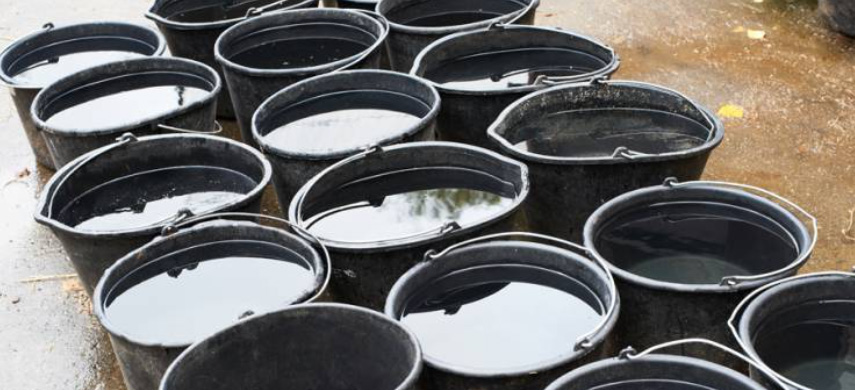
A plentiful, palatable source of water should be available to horses at all times, whether they are kept in stalls, runs, paddocks, or pastures. Because fresh forage is less plentiful in the wintertime, horses often subsist on diets composed largely of dry matter such as hay, grain, and nongrowing forage (pasture plants that have become dormant for the winter). The amount of dry matter consumed has a direct bearing on water requirements. Hay, grain, and nongrowing forage typically contain less than 15% moisture. In contrast, growing forages possess 60-80% moisture. Therefore, when horses are consuming winter rations, which are often chock full of dry matter, water requirements increase substantially. Horses are hardy creatures. Provided with adequate shelter, food, and water, they tolerate wintry elements well. Water can be offered to horses in several ways outdoors.
The option that undoubtedly involves the least amount of hassle is an automatic waterer. Because they are heated (usually by electricity, though sometimes with gas), there is little concern that they will freeze unless temperatures drop precariously low. Despite relatively few problems with automatic waterers, they should be checked once or twice daily to be sure they’re functioning properly.
Troughs should be outfitted with water heaters in late fall. Several types of water heaters are available. Horsemen may want to opt out of using heaters that float, particularly if you have a prankster or two in your herd. Nothing is more alarming than seeing the water heater being hurled from the tank during playtime exuberance.
One of the most popular heaters on the market is made specifically for the durable Rubbermaid stock tanks that have become popular throughout the country. Using the drain plug for installation, the thermostat-controlled heater sits near the bottom of the tank. If the tank is positioned near a fenceline, the electrical cord, which runs from the back of the tank, can be kept safely out of reach of horses.
Before using a heater, inspect it carefully for worn wires and other damage, and be sure it’s working properly. Once the heater has been installed or plunged into the trough, check the water for electrical sensation by placing a bare hand in the water. An accidental shock might scare some horses and back them off the water source indefinitely.
A final word on winter watering: Do not expect horses to eat snow to satisfy their water requirements. They would have to consume considerable snow to fulfill body needs. In addition, do not expect horses to break ice in troughs or tanks to gain access to potable water. Allow your horse to enjoy his winter wonderland, complete with clean, fresh water!
- Enjoy a More Serene Ride
- Lean Times, Lean Horses? Three Easy Ways Purina Can Help
- Purina's MQ Systemiq Probiotic Supplement
- Beyond Expectations - Book Trailer
- Education - Equine Health
- Health & Education Services
- Finding My Stride with Therapeutic Riding - from Beyond Expectations
- Celebrity Supporters of the Seen Through Horses Campaign! (1:56)
- On to Safer Pastures: Protecting Horses from Poisonous Plants
- Survey Finds Half of Horse Owners Unaware of Lesser Known Stressors
- Study: Intestinal Microbiome of Foals May Predict Future Racing Success
- Intra-articular Approaches to Osteoarthritis - Cornell Equine Seminar (Oct 2024)
- What to Do When Your Horse Ride Goes Wrong
- ICONS, Renegades, Mavericks, & Forces of Nature - Photographer Drew Doggett’s Latest Series
- A Grand National Melee - An Excerpt from the Novel The Horseman’s Tale by Tom Equels
- Minimally Invasive Surgery in the Abdomen - Cornell Equine Seminar
- Get to know...Mette Moe Mannseth, Master Trainer (11:26) - Horses of Iceland
- Autumnal Horse Care: Six Considerations
- Uncovering Secrets | Seen Through Horses Campaign (2:56)
- We love the American Quarter Horse! Why is it such a popular breed?