




Health & Education
We all want the best care possible for our horses. The Heath & Education section covers both Learning Institutions, Organizations as well as many sources for equine assistance including Veterinarians and Farriers.
For those who want a to formally study horses, the Education section includes College Riding, Equine Studies, and Veterinary Schools. Learn about the wide variety of horses in the Horse Breeds section. Supplements and Treatments Therapy are also included in the section.
Everyone can learn from Fine Art and there are some specialty Museums that might surprise you.
Horses as a therapy partner enrich the lives of the disabled. These facilities are listed in our Therapeutic Riding section. To help children and young adults build confidence and grow emotionally, please see the resources available on the Youth Outreach page.
Looking for a place to keep your horse? You can find it in the Horse Boarding section. Traveling? Find a Shipping company or Horse Sitting service if your horse is staying home!
Want to stay up to date with the latest training clinics or professional conferences? Take a look at our Calendar of Events for Health & Education for the dates and locations of upcoming events.
Do we need to add more? Please use the useful feedback link and let us know!
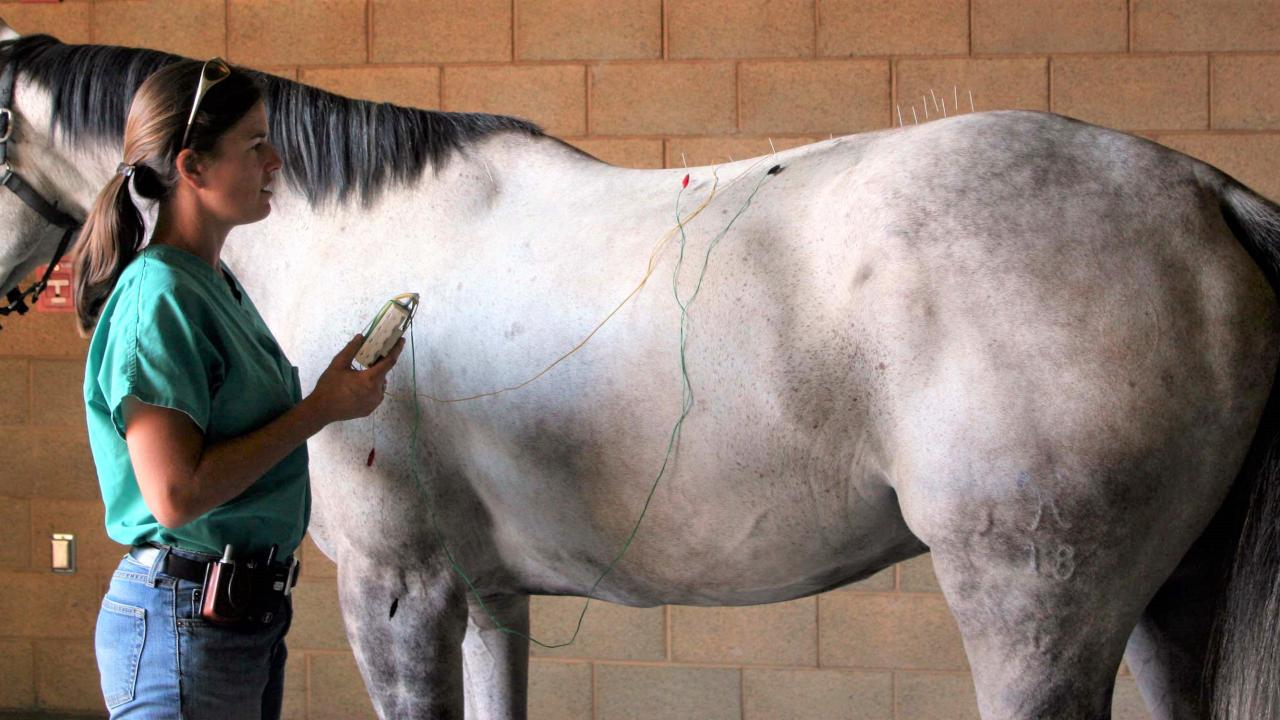
Acupuncture has been used to treat various medical conditions in humans and animals for more than 3,000 years. Horses were among the first animals treated with acupuncture due to their importance in warfare and farming. Today, equine acupuncture is commonly incorporated in the treatment of a number of conditions, especially musculoskeletal disorders and back pain.
The ancient Chinese discovered and described hundreds of acupuncture points (acupoints) in humans and animals. Modern research shows that acupoints are located in areas with a high density of free nerve endings, mast cells, small arterioles and lymphatic vessels. Stimulation at acupoints induces the release of beta-endorphins, serotonin and other neurotransmitters and can produce local, remote, and/or systemic effects. The use of acupuncture for pain relief is well supported by modern research studies. The effects of acupuncture on internal organs and on “balancing” the body as a whole are less understood, and more research is necessary to fully explain this ancient therapy.
The benefits of acupuncture have been widely recognized and integrated into Western veterinary and human medical practices. In November 1997, the National Institutes of Health (NIH) convened a panel of scientists to review the effectiveness of acupuncture. The result was the first formal endorsement of acupuncture by the NIH, stating: “There is sufficient evidence of acupuncture’s value to expand its use into conventional medicine and to encourage further studies of its physiology and clinical value.”
Acupuncture is a sought after treatment by horse owners due to its demonstrated safety and minimal unwanted side effects. It is well tolerated by most horses and provides a drug-free approach to address musculoskeletal pain that can enhance equine performance. This is particularly attractive for competitors who must adhere to show association-mandated prohibited substance policies. Aside from the needles, acupuncture does not require any specialized equipment, making it easier to perform in a variety of environments than some traditional methods.
Acupuncture can be used for a wide variety of issues.
Acupuncture can be extremely useful for pain. Besides pain relief, acupuncture may also have an impact on inflammation, which is ideal for horses with acute injuries and arthritis. It's thought that, by helping to return the nervous system to homeostasis, acupuncture may also help with the immune system and many other organ systems.
Your horse may also benefit from acupuncture's ability to increase microcirculation. This refers to the circulation of blood through your horse's smallest blood vessels -- the venules, metarterioles, terminal arterioles, and capillaries. They're located throughout your horse's body including in his or her organ tissue and stimulation of increased circulation can lead to improved wound healing, improvements in laminitis, and other great benefits.
Acupuncture for horses is a therapeutic technique that involves inserting fine needles into specific points on a horse's body to treat a variety of conditions:
- Pain relief: Acupuncture can help reduce pain and inflammation.
- Improved function: Acupuncture can help restore function to the body.
- Muscle relaxation: Acupuncture can help relax or stimulate muscles.
- Decreased swelling: Acupuncture can help decrease swelling.
- Organ function: Acupuncture can help affect organ function.
Acupuncture is a safe procedure when performed by a qualified veterinarian. It's often used in conjunction with other conventional veterinary treatments.
Here are some things to know about acupuncture for horses:
- Acupoints
There are 173 acupuncture points in animals, and each meridian has multiple acupoints. - De-Qi
When a needle is inserted, the patient experiences a sensation called "De-Qi" that indicates an acupoint has been stimulated. - Treatment plan
The number, size, and length of needles used is determined by observing the De-Qi reaction. - Treatment time
Some results can be seen immediately, but others may require several treatments. - Combination therapy
Acupuncture can be combined with medications such as local anesthetics or anti-inflammatories.
Photo Credit Photo Credit UC Davis Veterinary Medicine.
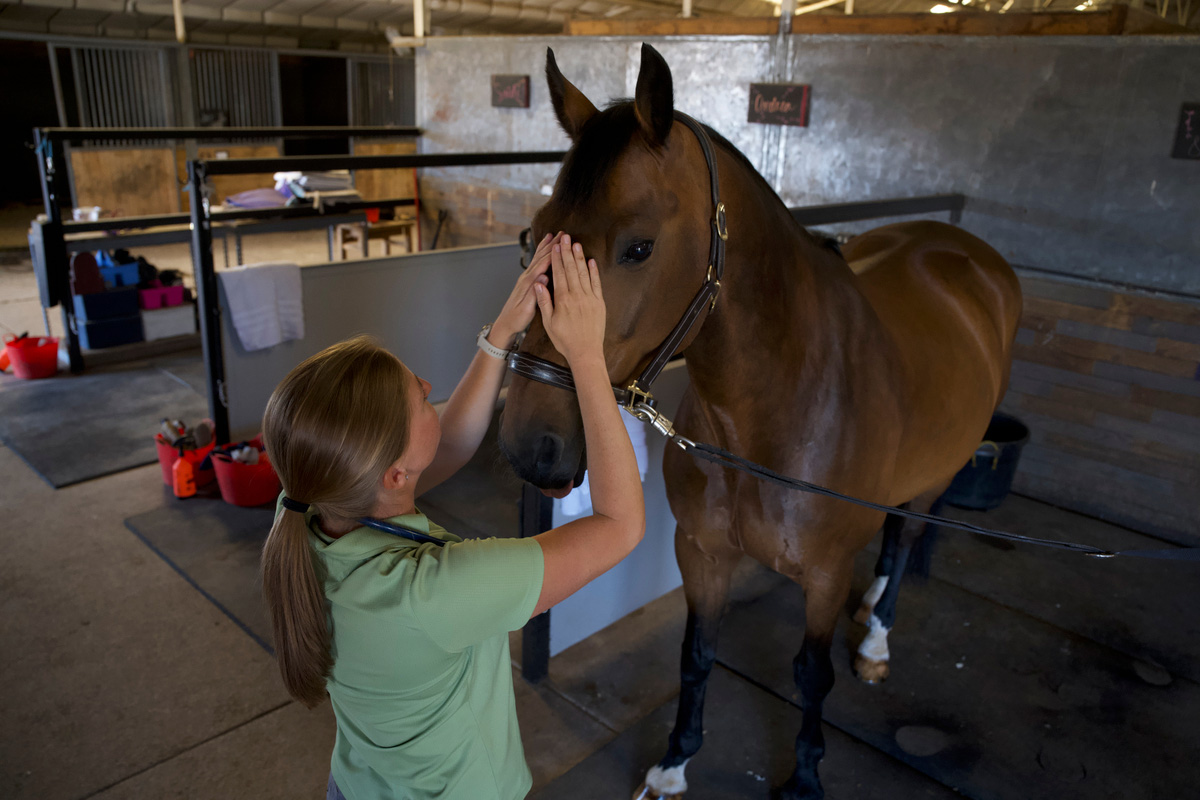
Time is of the essence to improve chances of recovery
While horse owners have likely heard of Equine Protozoal Myeloencephalitis (EPM), fortunately, less than one percent of the horse population will develop the disease.
The impact of this neurologic disease can be devastating, though, so it is important that horse owners know how to identify a potential case of EPM, how the diagnosis is made, the prognosis for recovery and how to manage the environment to help prevent EPM.
How Horses Contract EPM
EPM is most commonly caused by the protozoal parasite Sarcocystis neurona, which is transmitted to horses when they ingest food or water that has been contaminated with opossum feces. A less prevalent way horses can contract the disease is through the protozoal parasite Neospora hughesi. Very little is known about how this parasite is transmitted to horses.
What EPM Looks Like
Dubbed “the great pretender,” EPM presents in a variety of ways in horses. According to Amy Polkes, DVM, DACVIM, an equine internal medicine specialist and owner of the consultation service Equine IMED, clinical signs can range from mild to severe.
It can be anywhere from a change in performance under saddle with weakness, tripping, and/or muscle loss to a horse that is acutely recumbent (down).
Other clinical signs a horse owner might observe include, but are not limited to:
- Muscle atrophy, most often asymmetrical
- Ataxia (lack of coordination or abnormal gait, often more pronounced in the rear hind limbs)
- Tripping, toe dragging, locking stifles, difficulty picking up correct lead, “bunny hopping” with hind legs
Diagnosing EPM
According to Dr. Polkes, if a horse owner notices any of these signs, it is important to have a veterinarian evaluate the horse as EPM can be progressive and early treatment is important for success.
If there is a suspicion of neurologic disease, Dr. Polkes says, “It is very important to have a thorough neurologic evaluation by someone with advanced training, such as an internal medicine specialist or a veterinarian proficient in this area.”
During a neurologic evaluation, the veterinarian will assess proper nerve function and movement. The exam starts with observation of general behavior and body condition, with attention to any observed muscle atrophy.
Next, a cranial nerve exam is performed to assess the function of the nerves around the head and neck, including vision, eye movement, tongue tone and specific responses to stimuli. During the active portion of the exam, the veterinarian will observe the horse walking in straight lines, circles and over different surfaces, checking for gait abnormalities such as toe dragging, stepping on themselves or losing their balance.
Strength and coordination can be assessed with the “tail pull” exam by pulling the horse’s tail while they are walking forward. Proprioceptive deficits are common in horses with neurologic disease; they often are unaware of proper foot placement and may adopt a base-wide or base-narrow stance or leave a leg in a very abnormal and unnatural position. Dr. Polkes states, “A neurologic evaluation is the most important step in the diagnosis, as there must be neurologic deficits present for the diagnosis to be EPM.”
Diagnostic testing includes serum and cerebrospinal fluid (CSF) for antibodies to Sarcocystis neurona (or Neospora hughesi). A CSF tap can sometimes be done at the barn, or the veterinarian may want the horse transported to a clinic. The procedure is well tolerated with few complications and can provide important information for a more definitive diagnosis.
The presence of antibodies in serum only confirms exposure, but not necessarily active disease, as there are some areas of the country with high exposure, and those horses are likely to be positive on serum.
The level of the serum antibody also does not determine the likelihood of disease, a positive test at any level only confirms exposure but a negative test makes it unlikely to be EPM. The most accurate test for active infection is to submit both cerebrospinal fluid (CSF) and serum together.
The serum and CSF are both tested for antibodies, and a ratio is performed to determine if there is evidence of antibody production in the spinal fluid.
Diagnostic testing and treatment should only be done in horses with neurologic deficits and clinical signs consistent with EPM. Testing for EPM should not be part of an annual health check-up or pre-purchase examination.
Prognosis for Recovery
EPM can be treated with MARQUIS® (15% w/w ponazuril), which is administered as a paste. In general, about 66 percent of horses will either recover completely or well enough to be a pasture pet and about 33 percent will not respond well to treatment or have permanent issues from protozoal damage.
“I have had some great successes with treatment,” says Dr. Polkes. “A recent case responded so well to treatment with MARQUIS that he was back in the show ring within six months!”
Dr. Polkes says there are things horse owners can do to help manage the opossum population around their farms, such as keeping food sealed and stored properly, not leaving cat or dog food in places accessible to opossums, securing and disposing of waste in a timely manner and eliminating clutter.
For more information about EPM, click here.
About Boehringer Ingelheim
Boehringer Ingelheim provides innovation for preventing and treating diseases in animals. The company offers a wide range of vaccines, parasite-control products, and medicines for pets, horses, and livestock to veterinarians, animal owners, farmers, and governments.
As a leader in animal health, Boehringer Ingelheim values that the health of humans and animals is deeply connected and strives to make a difference for people, animals, and society. Learn more at www.bi-animalhealth.com
IMPORTANT SAFETY INFORMATION: The safe use of MARQUIS in horses used for breeding purposes, during pregnancy, or in lactating mares has not been evaluated. In animal safety studies, loose feces, sporadic inappetence, lost weight, and moderate edema in the uterine epithelium were observed. For use in animals only. Not for human use. Keep out of reach of children.
MARQUIS® is a registered trademark of Boehringer Ingelheim Animal Health USA Inc. ©2024 Boehringer Ingelheim Animal Health USA Inc., Duluth, GA. All rights reserved. US-EQU-0263-2024
This content originally appeared on Boehringer Ingelheim Animal Health and is published here with permission.
You can find more interesting stories in our section on Health & Education.
- Evaluating Pasture Quality for Horses
- Winter Water Requirements for Horses
- Enjoy a More Serene Ride
- Lean Times, Lean Horses? Three Easy Ways Purina Can Help
- Purina's MQ Systemiq Probiotic Supplement
- Beyond Expectations - Book Trailer
- Education - Equine Health
- Health & Education Services
- Finding My Stride with Therapeutic Riding - from Beyond Expectations
- Celebrity Supporters of the Seen Through Horses Campaign! (1:56)
- On to Safer Pastures: Protecting Horses from Poisonous Plants
- Survey Finds Half of Horse Owners Unaware of Lesser Known Stressors
- Study: Intestinal Microbiome of Foals May Predict Future Racing Success
- Intra-articular Approaches to Osteoarthritis - Cornell Equine Seminar (Oct 2024)
- What to Do When Your Horse Ride Goes Wrong
- ICONS, Renegades, Mavericks, & Forces of Nature - Photographer Drew Doggett’s Latest Series
- A Grand National Melee - An Excerpt from the Novel The Horseman’s Tale by Tom Equels
- Minimally Invasive Surgery in the Abdomen - Cornell Equine Seminar
- Get to know...Mette Moe Mannseth, Master Trainer (11:26) - Horses of Iceland
- Autumnal Horse Care: Six Considerations