





by Judith Martin Woodall
The narrow streets of lower Manhattan are an immediate and palpable history lesson spanning centuries of indigenous life, Dutch and British colonial settlement, the birth of the nation, and the growth of the modern city. Churches, graveyards––some long known, others only recently discovered––modest buildings, skyscrapers, statues, and placards marking every stage in the city’s history are repositories for our collective memory. They summon events, myths, and long vanished people; however remote from our own lives, whether the familiar, the new, the strange, or the vaguely recollected, they take up lodging in our minds and stay on.
Manhattan is a place of infinite adaptations. Historic districts and hundreds of landmarks honor individuals and places––some still famous, others not, and others representing ordinary life in a certain age and remarkable only for their survival but usually not in their original use. Warehouses and factories become artists’ lofts, hotels, and office buildings; offices buildings become apartments; movie palaces become churches; churches become night clubs; houses once built for a single family become shops and apartments.
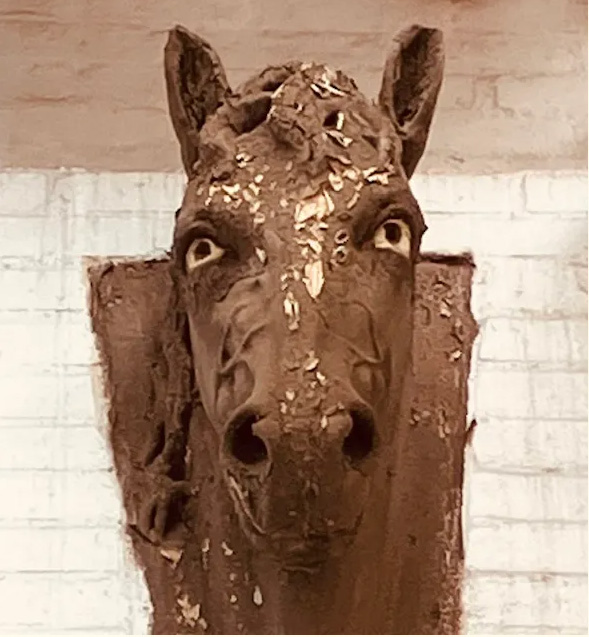
Reminders of equine history dot the island. Masonry horse’s heads or horse shoes above windows tell us that a parking garage was once a livery stable.
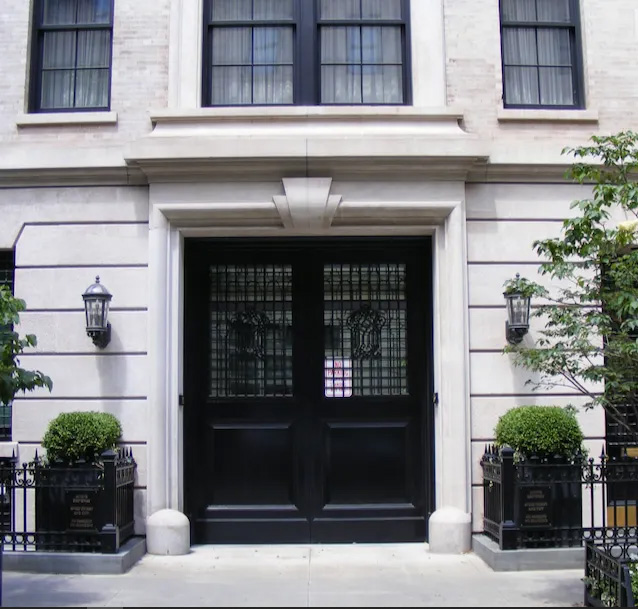
Rows of two-story buildings, many now homes and specialty stores, were once carriage houses. Elegant, multi-story mansions, their relationship to horses not so evident, bear the distinctive wide entrances telling us they were once the luxurious private carriage houses where Manhattan’s wealthiest citizens kept their horses.
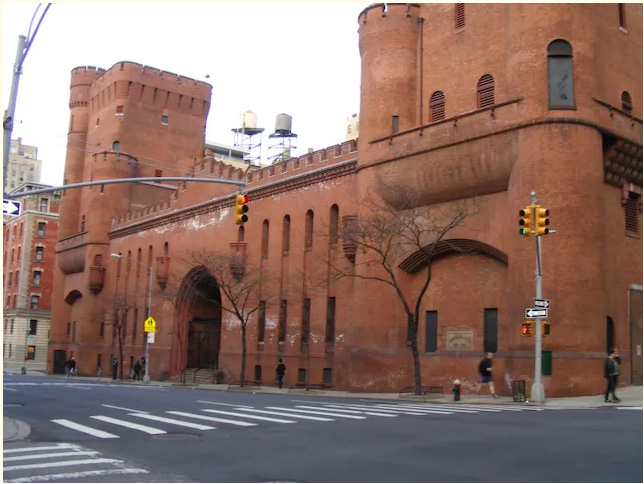
The facade of a giant armory where a militia cavalry unit once went through drills in its block-sized riding hall still stands on Madison Avenue, its motto, “Boutez En Avant” carved in the masonry.
A giant television studio on the Upper West Side was once the riding hall of the most famous riding school in America.
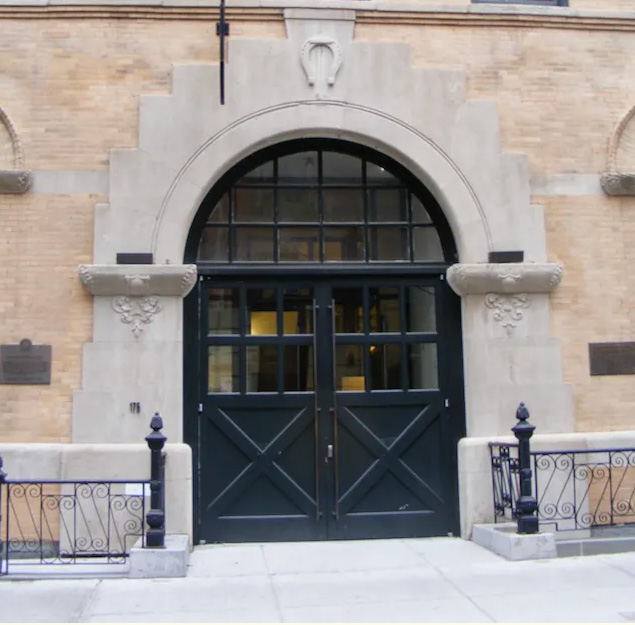
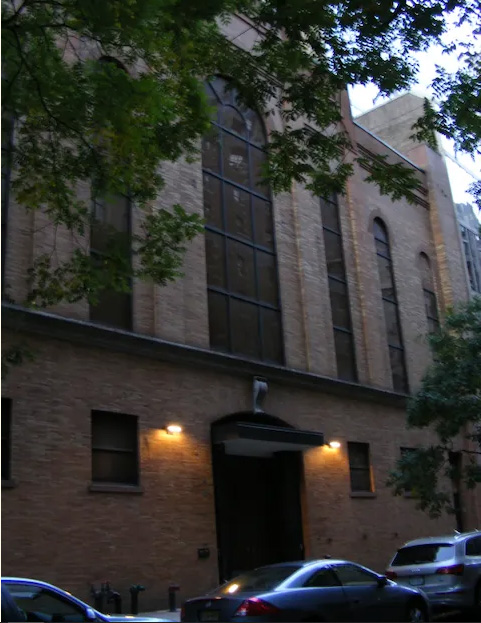
None of these is more evocative of the equine past than the Claremont Stables––the building’s official name in the National Register of Historic Places and the City Landmarks Commission.
It is not old by most standards, but when the multi-storied livery stable opened for business in 1892, only a couple of wooden structures stood on the block. Now part of a private school complex, the building was a home for horses for 115 years. Eighty of those years from 1927 until 2007, it was the Claremont Riding Academy, an institution beloved by thousands of New Yorkers and known to equestrians the world over.
Before the building acquired landmark status, an elegant black and gold sign, and faux wrought-iron gas lamps flanking the main doors, anyone driving by or walking down the street at night would see a neon glow from an older sign that read, “CLAREMONT” and in larger letters, “SADDLE HORSES.” The illumination sporadically failed on some letters, giving rise to unwelcome word formations and a little laughter from those who noticed. But passersby did not need a sign to tell them they were in the vicinity of a stable. The odor emanating from the building was apt to stop them. It was an earthy combination of dust and hay and animals and manure, a scent out of time and place in a modern city, malodorous to most, but dubbed eau de Claremont by patrons and staff.
Claremont was a slow down sort of place. Even the most hardened, in a hurry New Yorkers shortened their steps to cast a glance at the horses and the building. On a busy day in fair weather, the main doors were always open. The sight of horses and riders moving around the small indoor arena or preparing to ride out onto West Eighty-ninth Street to follow one-way traffic around the block to the bridle paths of Central Park attracted friends and strangers alike. Inside, voices high and low, loud and soft chanted instructions. There was always something to attract one’s attention.
A father and son, an older man who remembers when horse-drawn wagons delivered milk, a couple of teenage girls, a few more parents with children pause on the sidewalk to observe a dun horse hitched to the back of a pickup truck. A man wearing a heavy leather apron bends forward, lifts the horse’s right front foot and begins trimming the hoof. A stable hand returning from lunch sees the crowd, stops, and says to the farrier, “You should sell tickets.“ The crowd laughs and moves to the side, as a horse and rider step onto the street heading for Central Park. Eventually the bystanders move on, smiling and shaking their heads at one more unique experience in the life of New York City.
Read the Entire Article - Click Here
All photos courtesy of Judith Martin Woodall.
There are more fascinating stories in our section on Recreation & Lifestyle.